

Daylight Saving Time: How to Stay Safe During Evening Walks
Every year at the end of October, the clocks are set back one hour. For you, that means an extra hour of sleep. For your dog, it initially means: “Where’s my breakfast?” And from one day to the next, it’s pitch dark on your evening walk. We’ll show you how to handle the time change with ease and stay safe on dark paths.

Your furry friend doesn't keep track of time
Your four-legged friend goes by his internal clock and your routines. After the clock change, everything feels like it’s an hour later to him. So if he’s been eating breakfast at 7 a.m., he’ll feel like he’s standing next to your bed at 6 a.m., waiting.
The transition goes most smoothly when you take it one small step at a time. Each day, push back your dog’s feeding and walking times by 10 to 15 minutes until you’ve reached the new schedule. It’s best to start a few days before the change. Most dogs adjust after about a week. By the way, this also applies to cats: they usually dislike changes to their routine even more. And outdoor cats are more likely to be out and about at dusk after the change. To find out whether it’s worth keeping your cat indoors at night during the winter, read our article “Outdoor Cat or Indoor Cat?”
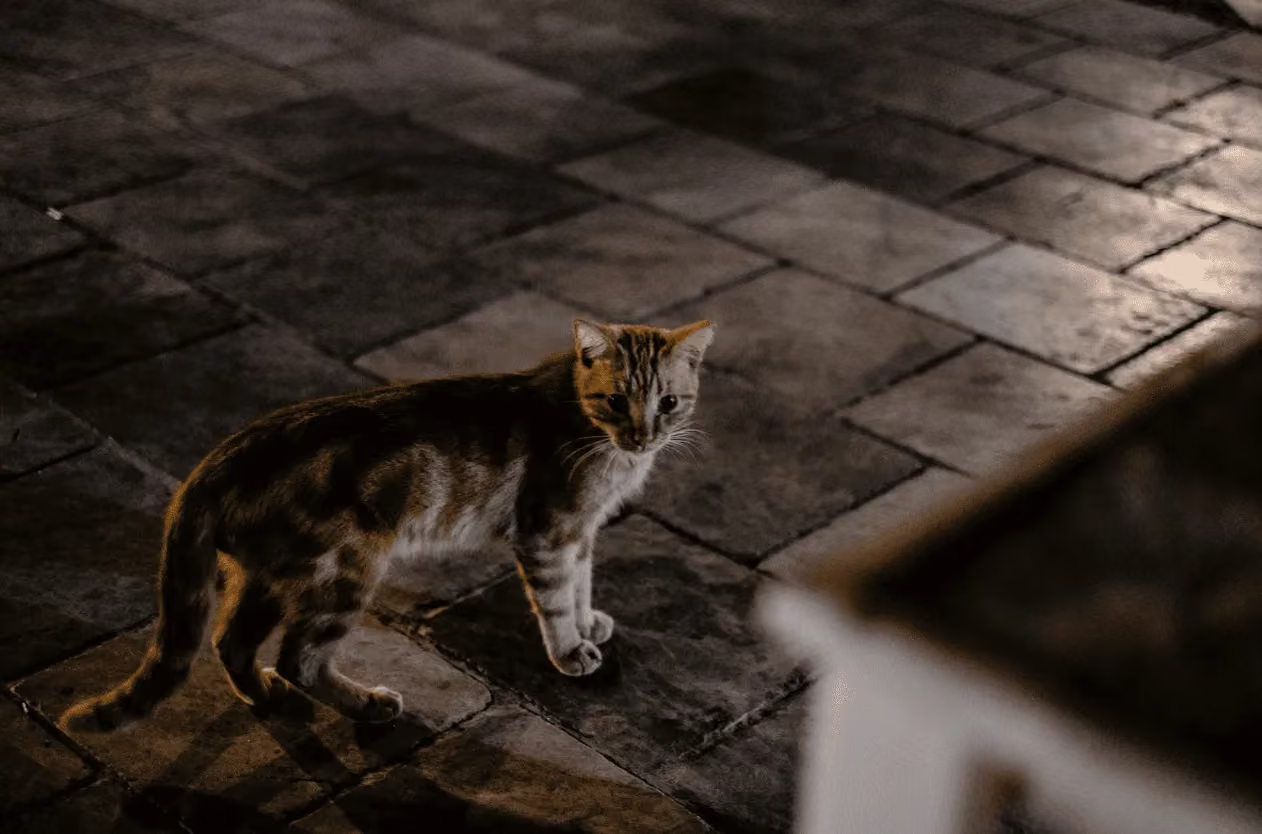
Why Twilight Is So Tricky
With the time change, the after-work walk suddenly takes place at dusk or in the dark. And that has consequences: According to the Swiss Council for Accident Prevention (BFU), as summarized by the Schwyz Cantonal Police, the risk of accidents for pedestrians is three times higher at dusk and at night than during the day. If rain, snow, or backlighting are added to the mix, it even increases tenfold.
The reason is simple: Drivers don’t see you until it’s too late. If you’re wearing dark clothing, you won’t be noticed until about 25 meters away; if you’re wearing light-colored clothing, it’s about 40 meters. With reflectors or lights, the distance is about 140 meters. By way of comparison: At 50 km/h, a car needs at least 40 meters to come to a stop. And your dog? He’s smaller, darker, and therefore often even harder to see than you are.
This way, you'll be clearly visible
Light-colored clothing is a good start, but reflectors are better. According to the BFU guide, reflectors make you visible from about three times the distance you would be in dark clothing, and reflective strips on your arms and ankles make you visible from four to five times the distance. Movement stands out particularly clearly in the headlights. Also, make sure you’re visible from all sides, not just from the front. A high-visibility vest or headlamp provides extra safety on unlit paths, and at the same time, you’ll be able to see where you’re stepping more clearly.
And That's How Your Dog Becomes a Lighthouse
There’s a whole range of options for your dog: glow-in-the-dark collars, leashes, and harnesses with reflective strips, LED tags for the collar, or a high-visibility vest. It’s especially worth combining several of these items for dark-colored dogs. A glow-in-the-dark collar shows where your dog is, while a vest makes its size visible.
Our tip: As a Calingo customer, you'll receive a free Tractive GPS tracker through the loyalty program. The latest models have built-in LEDs, so you and others can see your dog in the dark.
Before your first walk in the dark, it’s best to do a quick check: Are all the lights still working, are the batteries fully charged, and is the light-up collar positioned so that it isn’t covered by the fur? With long-haired dogs, a narrow collar can quickly get lost in the fur.
Traveling in the Dark: What You Should Keep in Mind
Many wild animals are out and about at dusk. So keep your dog on a leash on paths with limited visibility, in the woods, and along roads—even if your dog usually comes when called. In the dark, stick to familiar, well-lit paths and leave your headphones at home so you can hear what’s going on around you.
After your walk, it’s a good idea to take a quick look at your pet’s paws. In the dark, it’s easy to overlook broken glass, thorns, or loose gravel. And if your evening walk happens to be a bit shorter than usual, you can keep your four-legged friend entertained indoors with our DIY games for dogs and cats.
Our tip: You’ve just gotten back from your evening walk and your dog is licking its paw? As a Calingo customer, you have unlimited access to our online veterinarian 24/7—even late at night and on weekends. This way, you can get a quick, expert assessment without waiting in a waiting room and without any additional costs.
Visible, well-prepared, and relaxed: That’s how you can still have fun with your four-legged friend during the dark winter months. And if something does happen, your furry friend is well insured with Calingo.

Most dogs adjust after about a week. The easiest way to do this is to gradually shift mealtimes and walks by 10 to 15 minutes each day.
A light-up collar is a good start, but it only shows a small dot. When combined with a reflective leash or a high-visibility vest, your dog will be much more easily recognizable as a dog. And don't forget about your own visibility, either.
This may be fine in open, familiar meadows where you can reliably call your dog back. Near roads and in the woods, it’s advisable to keep your dog on a leash after dark. Also, be sure to follow the leash laws in your canton.
Cats are also at risk at dusk, especially near roads. A reflective collar with a safety clasp can help. Many cat owners also prefer to keep their cats indoors at night during the darker months of the year.


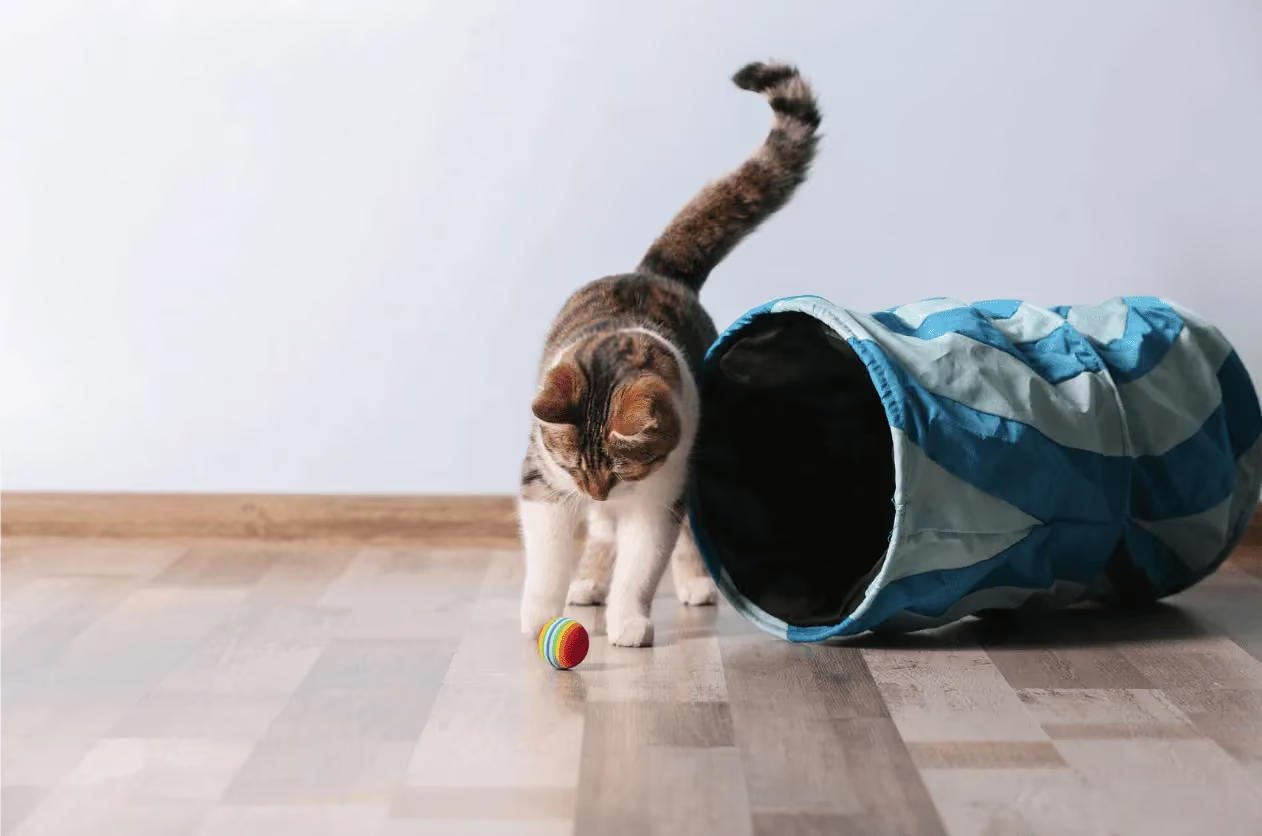
Long Evenings, Short Play Sessions: DIY Games for Dogs and Cats
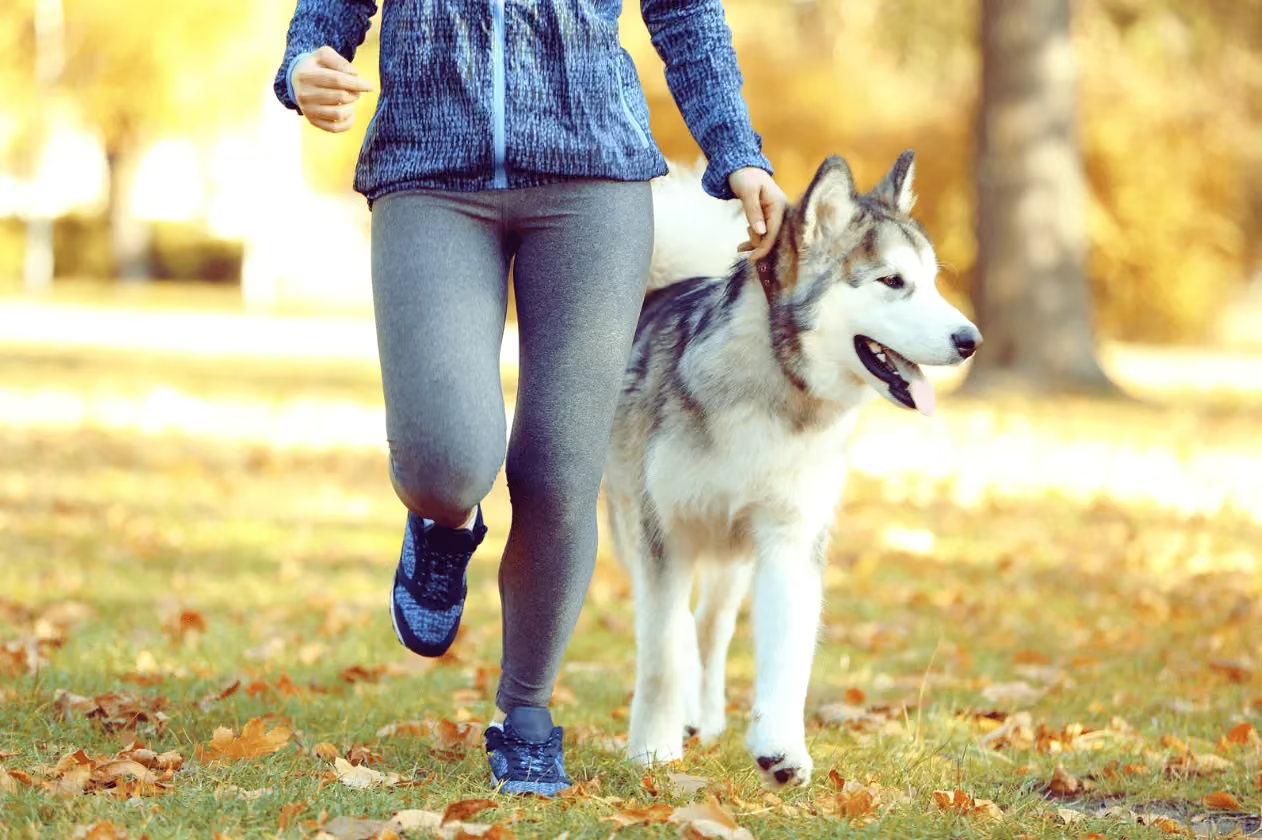
Getting Fit Together: A 15-Minute Workout for You and Your Dog
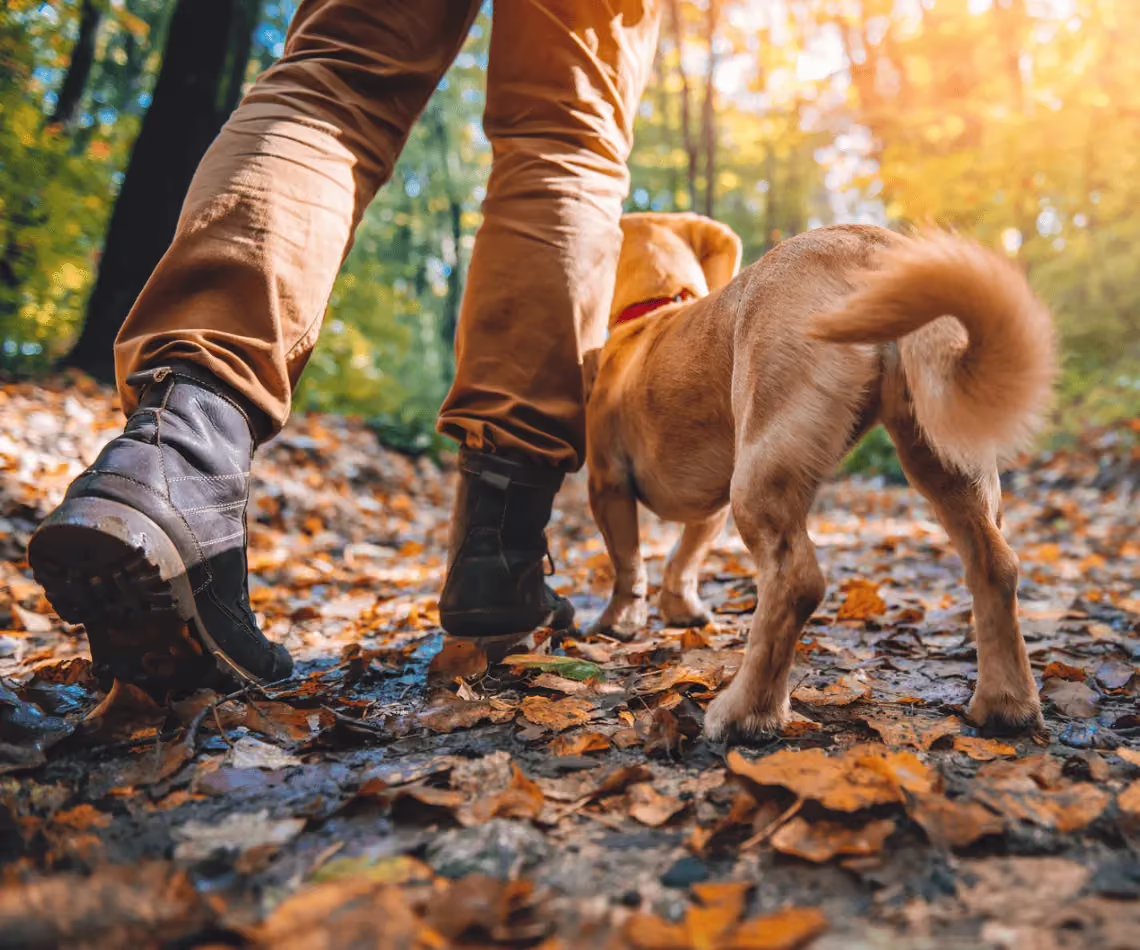
Fall Hikes with Your Dog: Our Most Beautiful Trails in Switzerland
From pet parents for pet parents
The health of your furry nose is our job


