

Getting Fit Together: A 15-Minute Workout for You and Your Dog
Is your gym membership just gathering dust, but you still take your dog for a walk every day? Then why not turn that walk into a little workout? With five simple exercises, you can build strength, endurance, and balance in just 15 minutes—and your dog will be right in the middle of it all, not just tagging along. No equipment needed—just do it right on your walk.
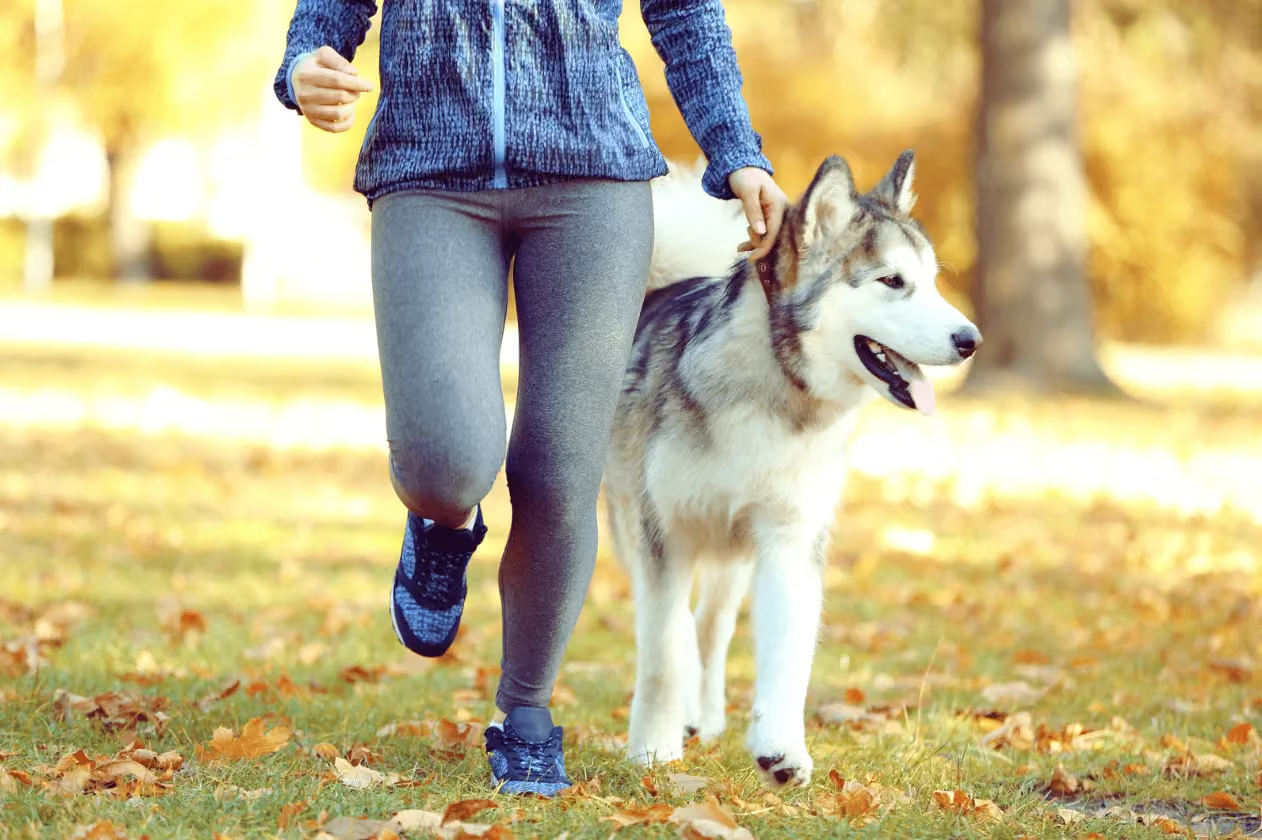
Before you get started: Is your dog ready for this?
Not every exercise is right for every dog. Puppies and young dogs are still growing—their bones and joints are still developing. We therefore recommend that you wait until your dog is fully grown before doing jumps, climbing stairs, or going on long jogs. For large breeds, this can easily take 18 months or longer. Older dogs, dogs with joint problems, or those who are overweight also need a tailored exercise program. To learn how to tell if your senior dog is in pain, read our article “Seniors in the Fall.”
And after eating, take a break first. Especially with large dogs, you should wait one to two hours after a meal before engaging in intense exercise to reduce the risk of gastric torsion. As for yourself: If you have any health issues or haven’t exercised in a long time, talk briefly with your doctor beforehand.
Warm-up: 3 minutes
Start by walking briskly, letting your dog sniff around and relieve itself at his own pace. As you walk, circle your arms, raise your shoulders, and let them drop again. Warming up is especially important in cool weather—for your muscles as well as for your four-legged friend’s.
The Workout: 10 Minutes
1. Power Walk Intervals
Duration: 2 minutes | For you: Endurance | For your dog: Stamina
Alternate 30 seconds of very brisk walking or light jogging with 30 seconds at a normal pace. Your dog should trot alongside you on a loose leash. This gets your circulation going without overwhelming either of you.
2. Squats with a “sit”
Duration: 2 minutes | For you: Legs and glutes | For your dog: Impulse control
Stand with your feet hip-width apart and lower yourself into a squat, as if you were sitting down on a chair. With each squat, give your dog the “Sit” command; as you stand up, give the “Stand” command or a word of praise. This way, you’ll work your legs and your dog will practice concentration. Start with 10 repetitions, take a short break, then do another 10.
3. Lunges with Slalom
Duration: 2 minutes | For you: Legs and balance | For your dog: Flexibility
Take a big step forward and lead your dog under your front leg while holding a treat in your hand. Then switch legs and lure him to the other side. For large dogs, this exercise also works by simply having him run in a figure-eight pattern around your legs.
4. Plank with “Stay”
Duration: 2 minutes | For you: Core and back | For your dog: Patience
Get into a forearm plank and keep your body straight like a board. Meanwhile, your dog lies down in the “down” position next to you and stays there. Hold the position for 20 to 30 seconds, take a short break, and repeat. Small dogs that are familiar with the game can also run through the tunnel underneath you.
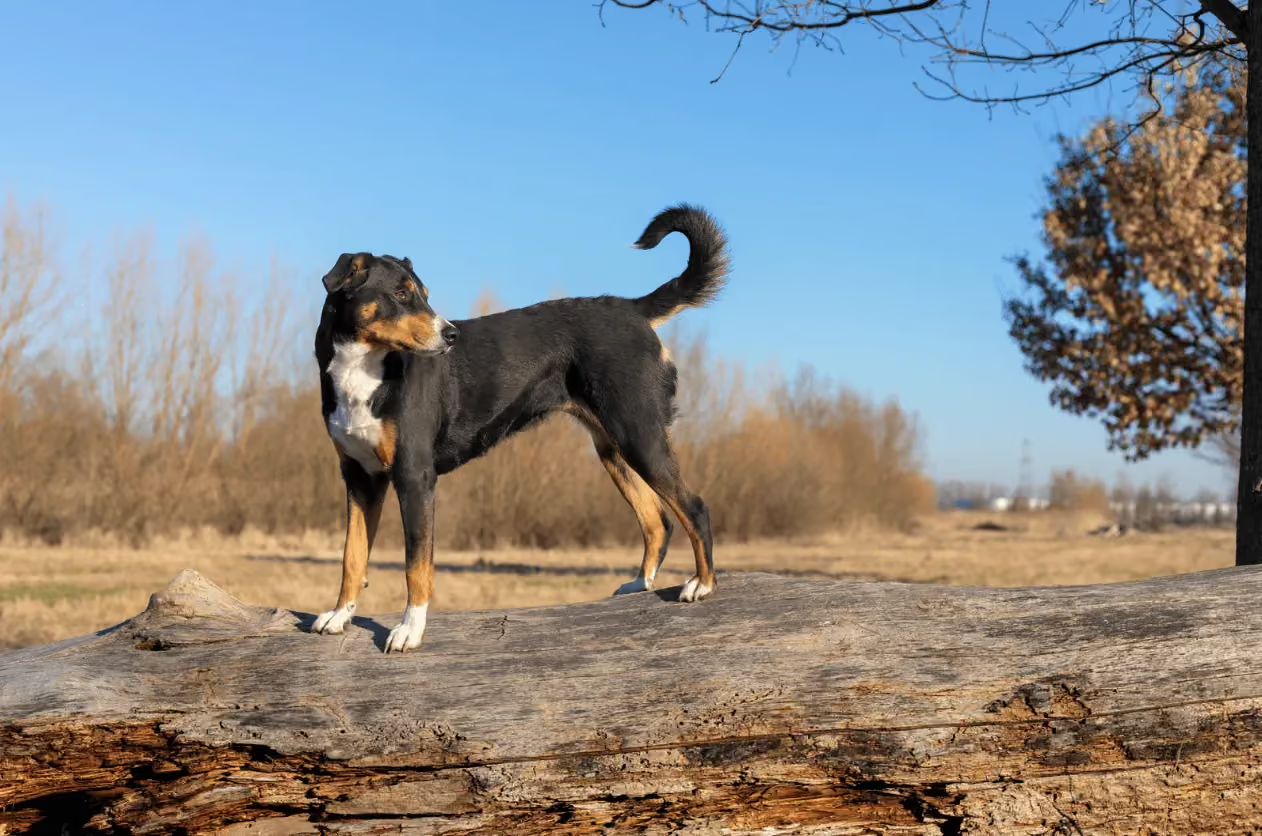
5. Balancing on a Tree Trunk
Duration: 2 minutes | For you: Calves and balance | For your dog: Body awareness
Find a low, sturdy tree trunk or the edge of a wall. Have your dog balance slowly across it while you walk alongside him on a loose leash. At the same time, do calf raises: rise up onto your tiptoes and slowly lower yourself back down. Be especially careful if the wood or leaves are wet—it can be slippery.
Cool-down: 2 minutes
To wrap things up, keep walking at a leisurely pace and let your dog sniff around to his heart’s content. This helps him relax and is an important part of his recovery. You can use this time to gently stretch your thighs, calves, and shoulders. Finally, give your team an extra dose of praise.
Tips for the Darker Months
In the fall and winter, workouts often take place at dusk. So choose a well-lit, clearly visible route and make sure you’re both easily visible. To find out the best way to do this, check out our article “Daylight Saving Time: How to Stay Safe on Dark Walks.”
It's worth sticking with it
Two to three times a week is enough to feel a difference. This is also in line with the Swiss physical activity guidelines: In addition to endurance training, they recommend that adults do strength-building exercises at least two days a week. Squats, lunges, and planks cover exactly that. Build up slowly, for example by doing more repetitions or longer intervals. And keep an eye on your dog: if he’s panting heavily, lagging behind, or lying down, it’s time for a break. The most important thing, anyway, is that you’re both having fun. To find out why regular exercise with your dog is so good for your health, read our article “Healthy with Your Furry Friend.”
Our tip: Is your dog limping after a workout or favoring one leg? As a Calingo customer, you can contact our online veterinarian 24/7 with no limits to find out whether a visit to the clinic is necessary.
A fit team is a healthy team. And if something does happen, your dog is well covered with Calingo dog insurance.

Calm exercises like “Sit” during a squat or “Stay” during a plank can be done even with young dogs. You should wait until your dog is fully grown before doing jumps, stairs, jogging, and balance exercises at height. For large breeds, this can take 18 months or longer. If in doubt, ask your veterinarian or, as a Calingo customer, use telemedicine.
Two to three times a week is a good schedule. On the other days, just enjoy your usual walks.
Yes, if your dog is fully grown and healthy, and you build up the exercise gradually. Very heavy dogs and senior dogs are usually not suitable for this. Also, make sure to choose a soft surface and take plenty of breaks.
Many exercises are new to dogs. Reward even small steps, keep sessions short, and practice the commands first without a workout. With a little patience, training together will quickly become the highlight of your walks.


Daylight Saving Time: How to Stay Safe During Evening Walks
Long Evenings, Short Play Sessions: DIY Games for Dogs and Cats
Fall Hikes with Your Dog: Our Most Beautiful Trails in Switzerland
From pet parents for pet parents
The health of your furry nose is our job


