

Understanding cat language: What is my cat really trying to say?
How do cats really communicate? In this blog post, you will learn how to correctly interpret typical cat signals such as body language, eyes, ears, tail positions, and sounds. The article will help you to understand your cat better, avoid misunderstandings, and recognize possible signs of stress or health issues at an early stage. A compact guide for anyone who wants to understand their cat better in everyday life.
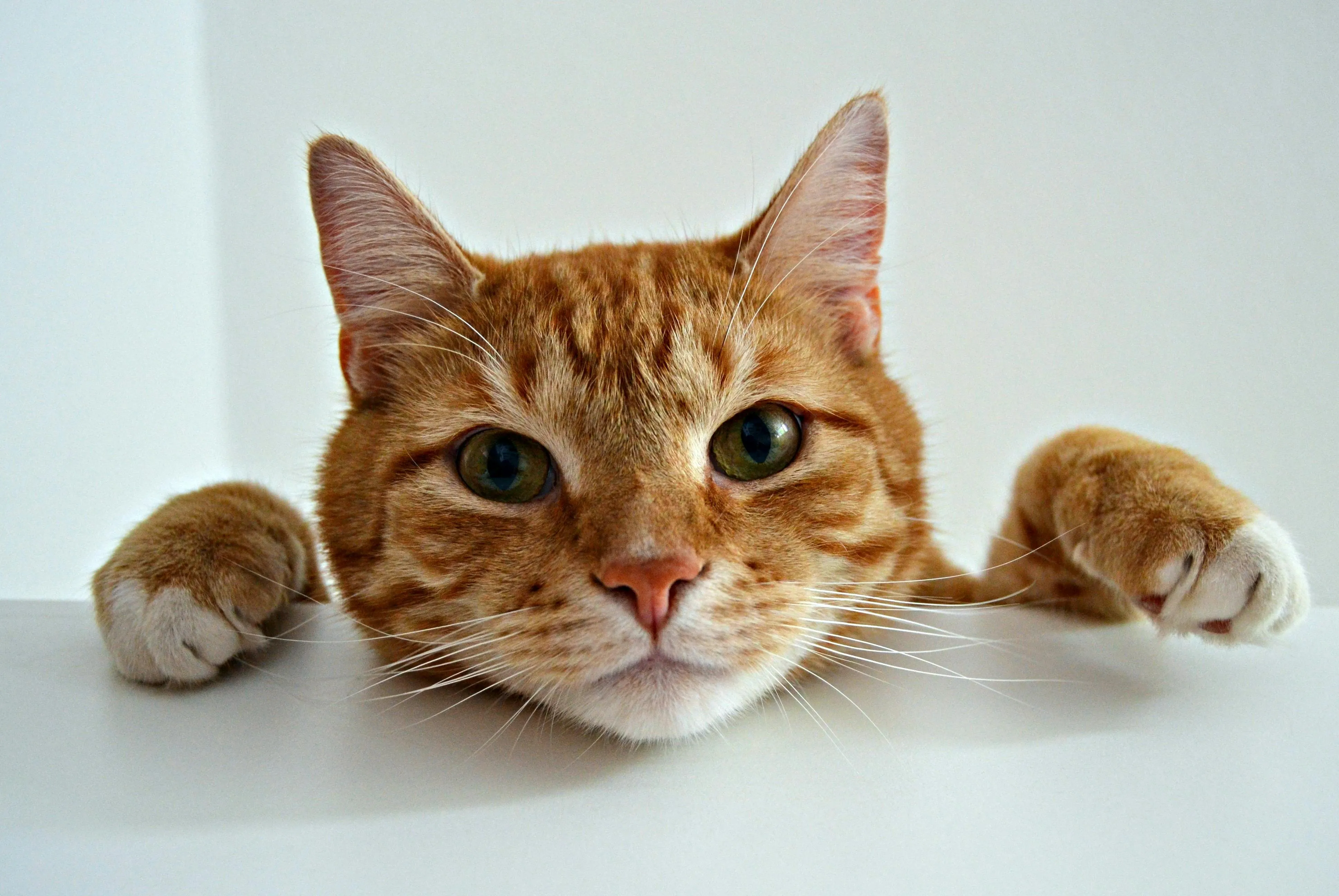
Depending on the cat association, there are around 40 to 80 recognized cat breeds worldwide. Which breeds are considered distinct varies depending on the organization—but one thing is certain: cats are as diverse as they are fascinating.
Each breed has its own character traits and characteristics. For example, Ragdolls, British Shorthairs, and Persian cats are considered to be rather calm and cuddly companions, while Abyssinians and Bengal cats are among the more active and energetic breeds.
Despite all these differences, our velvet-pawed friends have one thing in particular in common: their unique way of communicating with us humans. Some cats express themselves clearly and obviously, while others communicate subtly and delicately—as individual as our beloved feline friends are. If you want to understand cat language, it's best to start by looking at different signals in the big picture.
How do cats communicate with humans?
While we humans prefer verbal communication, cats use a mixture of sounds, body language, smells, and touch to express their needs, emotions, and social intentions. Many cat owners would like to have a cat language translator or cat language app to better understand the often subtle cues—but in reality, observing natural signals is the most effective approach to learning cat language.
Vocal communication
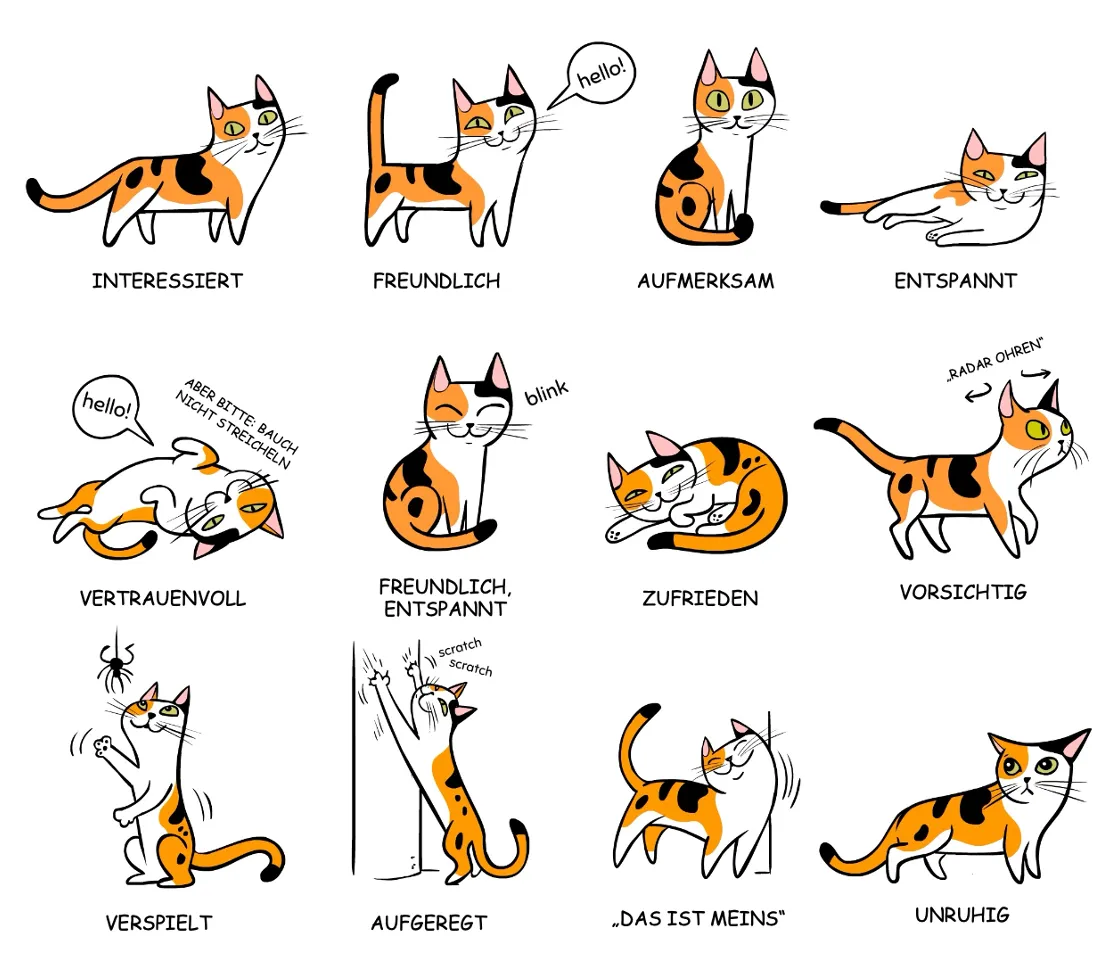
It has been scientifically proven that cats mainly use meowing to communicate with humans. They meow much less frequently among themselves, instead using specific sounds such as trills or caterwauls. Cats can also hiss when they feel threatened and purr when they want to calm down, feel comfortable or – depending on the situation – relieve stress.
- The trill is a short, rolling sound, a mixture of meowing and purring. Cats usually use it in friendly social situations, for example: to greet someone, when they want attention, or when they want to signal something positive.
- Caterwauling (howling) is a loud, drawn-out, often plaintive screech. It occurs in emotionally charged situations, such as when female cats are in heat, during territorial conflicts, or when experiencing fear, stress, pain, or discomfort.
- Meowing: cats often meow when they want to communicate with us humans. A short, high-pitched meow is often used as a greeting, while a long meow means that the cat needs something, perhaps food or attention. Here, too, it is helpful to consider the cat's communication in its overall context.
- Purring: perhaps one of the most familiar and fascinating sounds a cat can make. Many people immediately associate it with contentment, and cats do indeed often purr when they are relaxed, seeking closeness, or feeling comfortable. When your cat lies comfortably on your lap, closes its eyes slightly, and purrs steadily, it is showing trust, security, and inner peace.
But purring does not always mean well-being. Cats also purr in situations where they are uncertain, stressed, or even injured. Purring can then be a kind of self-calming mechanism that helps to reduce anxiety or relieve pain. It is believed that the vibrations of purring can have positive physical effects, such as regulating breathing or supporting healing. This is why a cat may even purr at the vet—not necessarily because it is feeling well, but because it is trying to calm itself down. - Hissing: Please keep your distance! The cat feels threatened.
What a cat's ears tell us
The ears are one of the most important communication signals in cat language. Depending on their position, they can provide information about attention, mood, stress levels, or even pain.
- Ears pointed forward and pricked up: the cat is alert, very aware of its surroundings, and in a focused or curious state. This posture often corresponds to an alert mode, e.g., when something sounds exciting or moves.
- Ears in a neutral position, slightly forward: the cat is relaxed, feels safe and comfortable. This is a typical posture in calm situations, such as when dozing or observing in a relaxed manner.
- Ear twitching: short, rapid movements of the ears forward and backward indicate that the cat is ready to hunt or is focused on a specific stimulus.
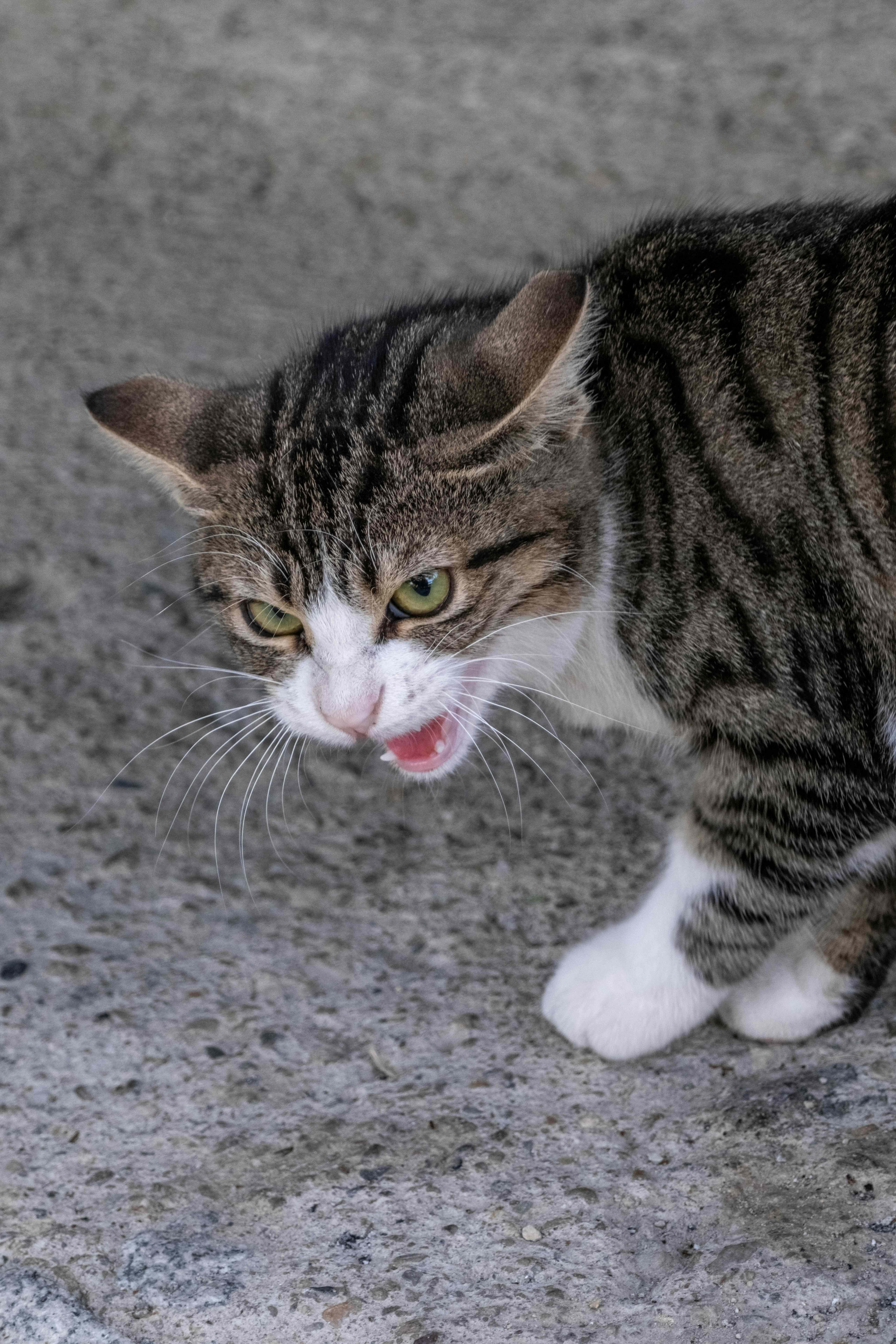
Important: if ear twitching occurs frequently and the cat scratches its ears a lot, this may indicate problems such as an ear infection or ear mites. In this case, a veterinarian should examine the ears. - Ears pointing backward or to the side: this position indicates that the cat is fearful, insecure, or defensive. It wants distance and is communicating, "Please don't botherme."
- Ears pulled back and pointing downwards: this posture can be a sign of discomfort, pain, or stress. It may seem subtle, but it is an important warning sign.
Eye language
Slow blinking and narrowing the eyes play a central role in communication between cats and humans. A study (Humphrey et al. 2020) showed parallels between narrowing the eyes and slow blinking and the Duchenne smile in humans, i.e., a genuine emotional smile. The results also clearly show that cats respond to human slow blink signals by narrowing their eyes or performing slow blink sequences themselves.

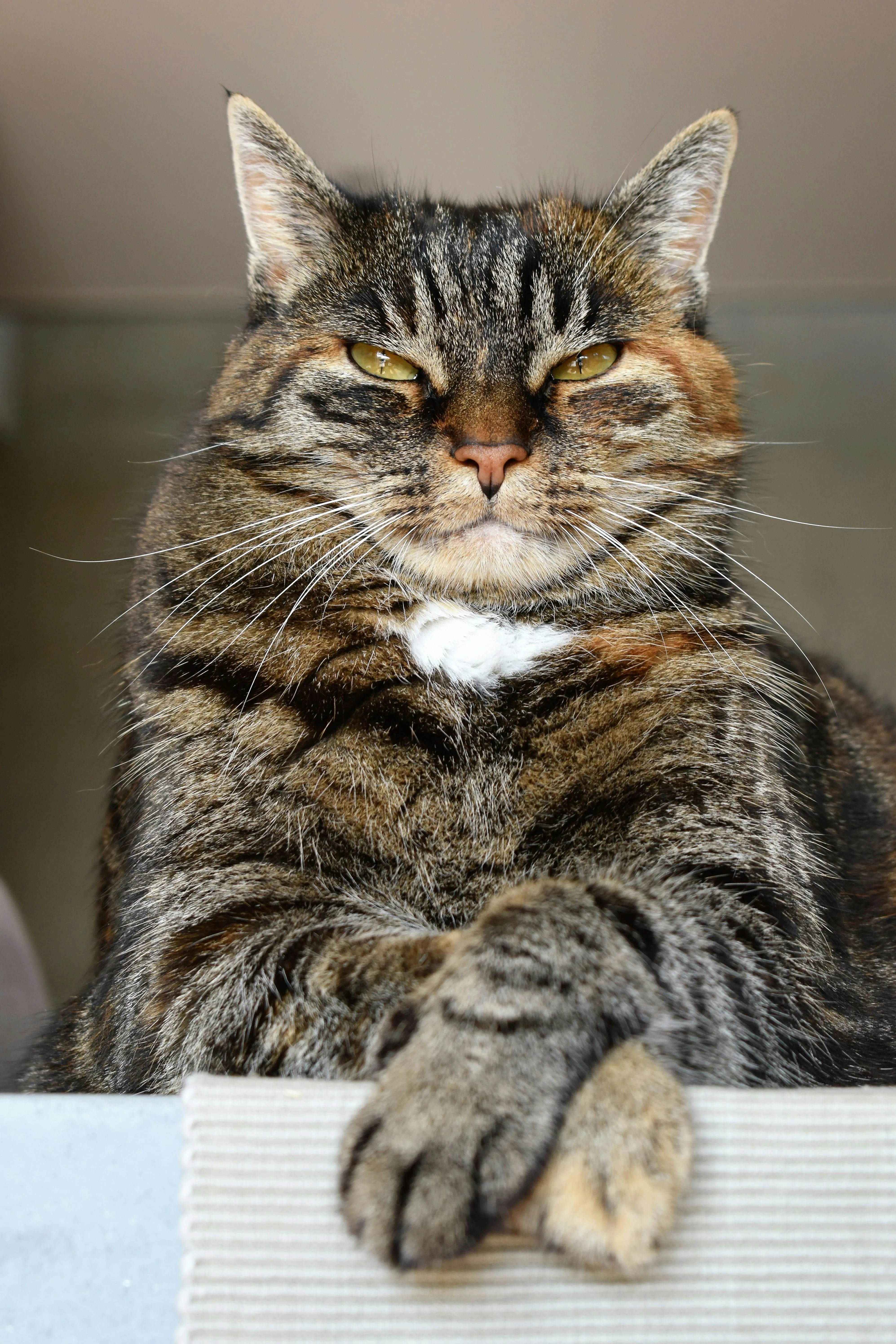
If your cat keeps its eyes half-closed, blinks slowly, and displays a relaxed body posture, this is an expression of contentment, trust, and well-being.
In contrast, wide-open eyes with large pupils are signs of stress, fear, excitement, or illness.
What a cat's tail reveals about its mood
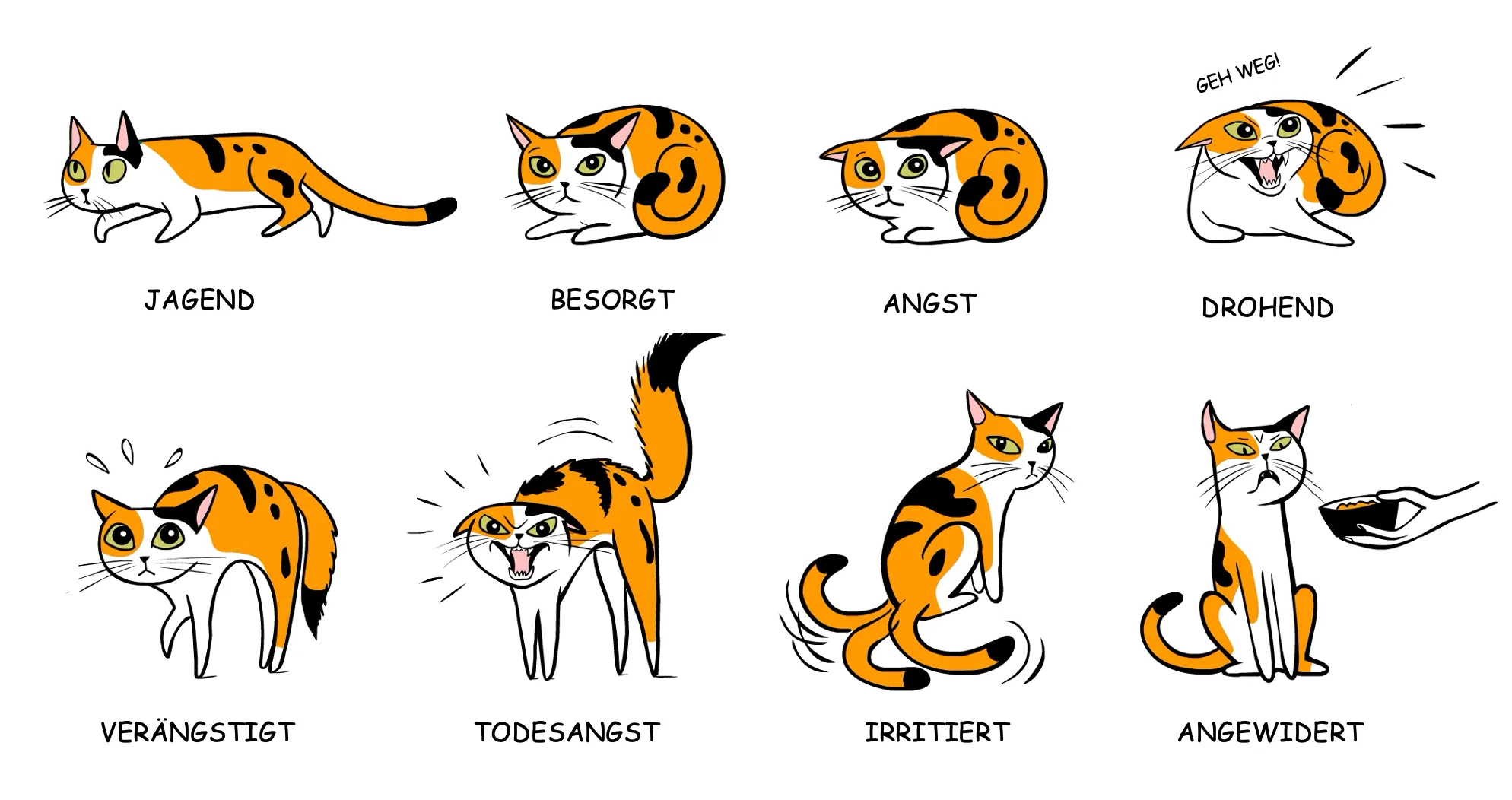
The tail is an important communication tool, but should never be viewed in isolation. The same tail position can mean different things depending on the position of the ears, body posture, and overall expression.
- A straight tail pointing upwards usually means a friendly greeting. However, if the ears are bent backwards and the back is arched at the same time, the cat is showing fear or potential aggression.
- Tail movement: If the cat is lying relaxed but its tail is gently wagging back and forth, this means that it is relaxed but alert to its surroundings. This is completely normal. It is normal "passive attention" and not a sign of stress.
- A tail that is whipping vigorously or bushy indicates stress, nervousness, fear, overwhelm, or potential aggression.
- When the tail hangs loosely or curves slightly downward, the cat is calm, balanced, and relaxed. This is the typical posture of a cat that is neither irritable nor particularly alert.
Touch and posture
Touch plays a central role in communication between cats and humans. It not only serves to strengthen social bonds, but also conveys security, affection, and trust. One of the best-known forms is head butting, also known as bunting. This involves the cat rubbing its face against people or objects, leaving scent marks. For us, it is an affectionate greeting ritual, for the cat a sign of belonging. Stroking the legs has a similar effect: it is a social approach and at the same time an invitation to make contact. Another typical behavior is kneading with the paws, also known as "milk kneading." Cats rhythmically press their front paws onto a soft surface. This behavior originates from early puppyhood and is often displayed in moments of well-being.
Body posture also reveals a lot about a cat's inner experience.
An upright and relaxed posture indicates calmness, serenity, and well-being. The cat feels safe and confident in its surroundings. The effect is quite different when the cat stands crouched with its ears pinned back. This posture indicates fear, insecurity, or even pain and should be taken seriously. Caution is also advised with a cat that shows its belly. Although this can be an expression of great trust, it does not automatically mean that it wants to be stroked there.
Smell as an underestimated level of communication
Humans can't smell it, but for cats it's essential. Cats leave scent marks with their faces, paws, and the base of their tails. A familiar smell in the home conveys a sense of security. This explains why changes in the household (new furniture, new people) can cause stress.
Do you already feel like a cat whisperer?
This article is intended as a brief introduction to help you better understand cats and become more aware of their signals in everyday life. It is not a substitute for individual behavioral counseling or veterinary consultation, but it can help you avoid misunderstandings, recognize needs more quickly, and consciously deepen your relationship. Always observe your cat in its overall context (ears, eyes, posture, tail, voice). If you are unsure or notice sudden changes in behavior, seek professional advice at an early stage. As a Calingo customer, you have the option of chatting or calling a veterinarian online for free and from the comfort of your own home. The online veterinary consultation service supports you with questions about animal health. This keeps your relationship trusting, relaxed, and a little richer every day.
And if you want to test how well you already understand cat language, you'll find a short self-test in this article from National Geographic —a playful addition to the topic of cat communication and a nice way to further expand your knowledge.

No. Cats do not mark their territory out of spite. Before assuming that it is a form of protest, possible causes should be ruled out. Common reasons include unsuitable or dirty litter boxes, too few litter boxes in the household, stress during toilet visits, or medical problems such as bladder infections. Only when physical and environmental causes have been ruled out can behavioral factors be considered.
Both are possible. Some cats—especially in lively households—deliberately seek out quiet places to retreat to outside the living room so they can sleep undisturbed or feel safe. However, retreating can also be one of the first signs of illness, pain, or stress. If the behavior changes suddenly or occurs unusually often, you should take a closer look and seek veterinary advice if necessary.
Sudden aggression is almost never related to malice. In most cases, there is a trigger behind it that the cat cannot express in any other way. Many cats react aggressively when they feel threatened, overwhelmed, or uncomfortable. Common causes include fear, pain, or illness; poor or lack of socialization; frustration; lack of exercise; or being overwhelmed.
A sudden change in voice is always a sign that should be taken seriously. Cats do not change their voice without reason. Common causes include inflammation of the upper respiratory tract, pain, stress, or anxiety.
The first and most important point of contact is always your veterinarian. They can rule out or treat any medical causes. If the health assessment is normal or your cat's behavior continues to cause concern, the veterinarian can refer you to specialized veterinary behaviorists for cats.



Fall Hikes with Your Dog: Our Most Beautiful Trails in Switzerland
Pumpkin for Your Furry Friend: A Healthy Snack?

Back from Vacation: Recognizing Separation Anxiety in Your Pet
From pet parents for pet parents
The health of your furry nose is our job


