
How dogs communicate—and how we can understand them better
Tail wagging and growling are among the most well-known forms of expression in dogs—but their meaning is often misunderstood. Did you know that tail wagging does not automatically mean joy and growling is not always a sign of aggression? Dogs communicate in a much more subtle and versatile way than many people think. Those who can read their body language correctly will understand their needs better—and ensure more safety and harmony in everyday life.
The relationship between humans and dogs goes back tens of thousands of years. Since the domestication of wolves, dogs have learned to live closely with us—but their forms of communication continue to be strongly influenced by their ancestors. While we humans express ourselves primarily through verbal language, dogs use their own unique canine language, consisting of body language, facial expressions, sounds, and smells. Unfortunately, we humans cannot perceive the latter – the chemical signals. Yet scent signals are a key channel of communication for dogs, enabling them to exchange information over long distances. This makes it all the more important for us to focus on the visible and audible signals that we can perceive and learn to understand them correctly. If you want to understand dogs, pay attention to their nonverbal communication and learn to interpret these signals correctly – a mental translator for dog language can be very helpful in everyday life.
Dogs originally lived in social groups called packs. In such groups, clear communication is essential for survival. That is why dogs have a highly differentiated system of body signals and facial expressions that enables them to avoid conflicts, promote cooperation, and maintain social bonds. For this interaction to work in everyday life with us, clear, consistent signals from humans are also crucial. Understanding dogs therefore always means consciously using your own nonverbal communication.
Tail wagging and growling are among the most well-known forms of expression—but did you know that tail wagging does not always mean joy and growling does not automatically express aggression?
Tail signals – often misunderstood
In wolves, the tail plays a rather subordinate role in intraspecies communication. Dogs, on the other hand, wag their tails much more frequently and in a variety of ways—presumably as a result of domestication.
Recent studies show that the cerebellum is involved in controlling tail wagging: when a certain area of the cerebellum is stimulated, tail wagging increases.
In addition, modern behavioral biology studies indicate that the direction of wagging (from the dog's perspective) allows conclusions to be drawn about emotional state:
Right-sided wagging is more commonly observed in positive situations, while left-sided wagging is more likely to be associated with uncertainty or negative emotions.
Important: Tail wagging does not automatically mean "I'm happy!" It only means: I am ready to interact.
A few examples:
- The tail is high and immobile: alertness, possible aggression.
- The tail is high and wags stiffly: excitement and high arousal (positive or negative).
- The tail wags quickly, loosely (or uncontrollably): joy, excitement, readiness to play.
- The tail is in a neutral position and relaxed: calm.
- The tail is low or between the legs: fear, insecurity, submission.
What do a dog's eyes reveal?
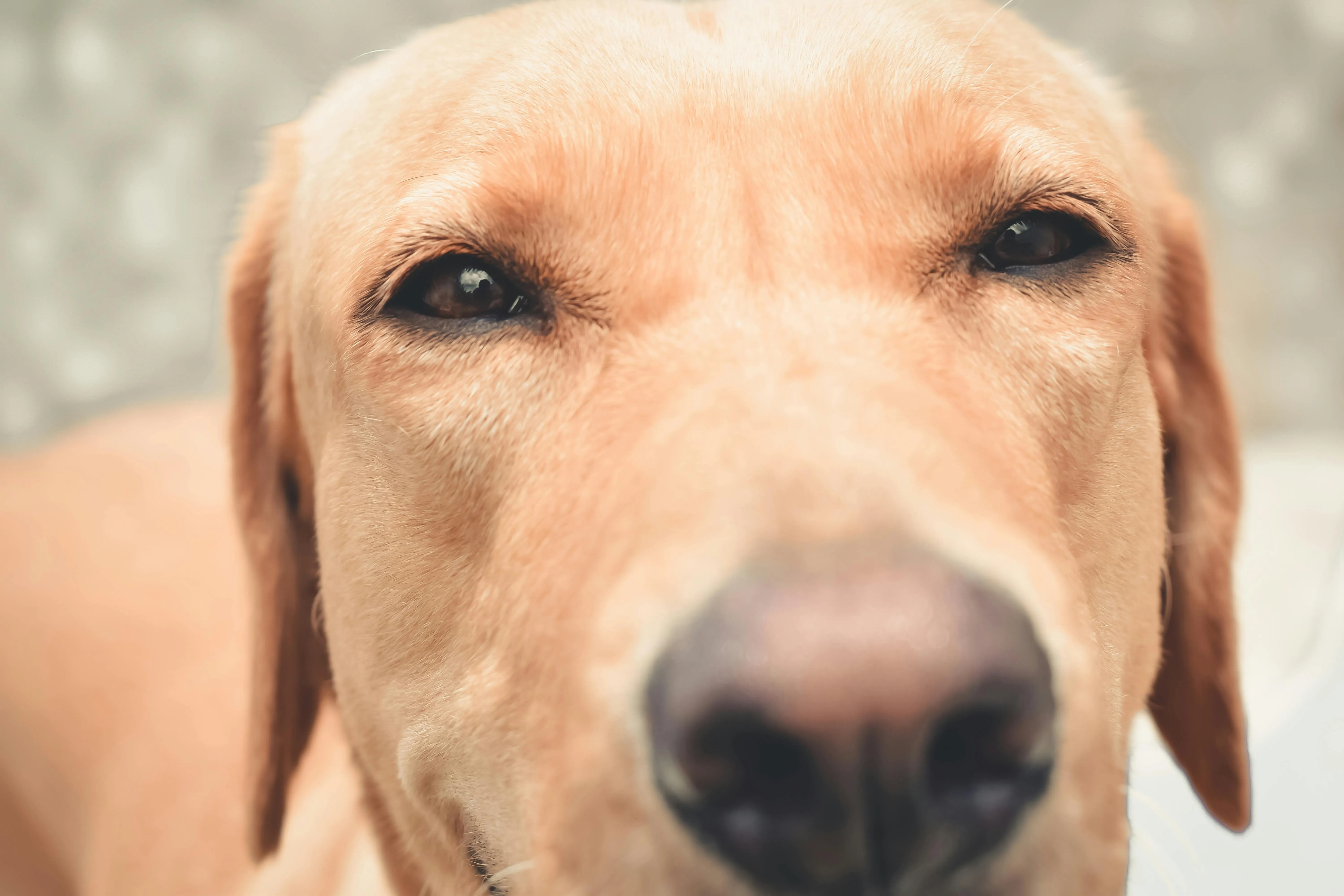
The eyes are an expressive channel of communication for dogs—and relatively easy for us humans to read. This is because we also communicate strongly through eye contact and can often intuitively recognize emotional states based on the eyes. Together with facial expressions (e.g., eyelid tension, eyebrow/forehead movements, slight changes around the mouth), they provide a subtle insight into the current emotional state.
Gaze and pupils – what do they mean?
- Fixed, unblinking stare: can be interpreted as a challenge, a warning signal, or an expression of strong self-confidence. Often an indication that the dog is assessing the situation or wants to control something.
- Wide-open eyes, large pupils: this can be a sign of fear, stress, or excitement. Pupil dilation is caused by the activation of the sympathetic nervous system ("fight-or-flight" mode).
- Calm, gentle gaze: a sign of relaxation, well-being, and trust. Often accompanied by relaxed body language.
- Eyes darting back and forth: indicates uncertainty, fear, or nervousness. In such moments, dogs try to quickly survey their surroundings and assess potential threats.
Ear position and its significance
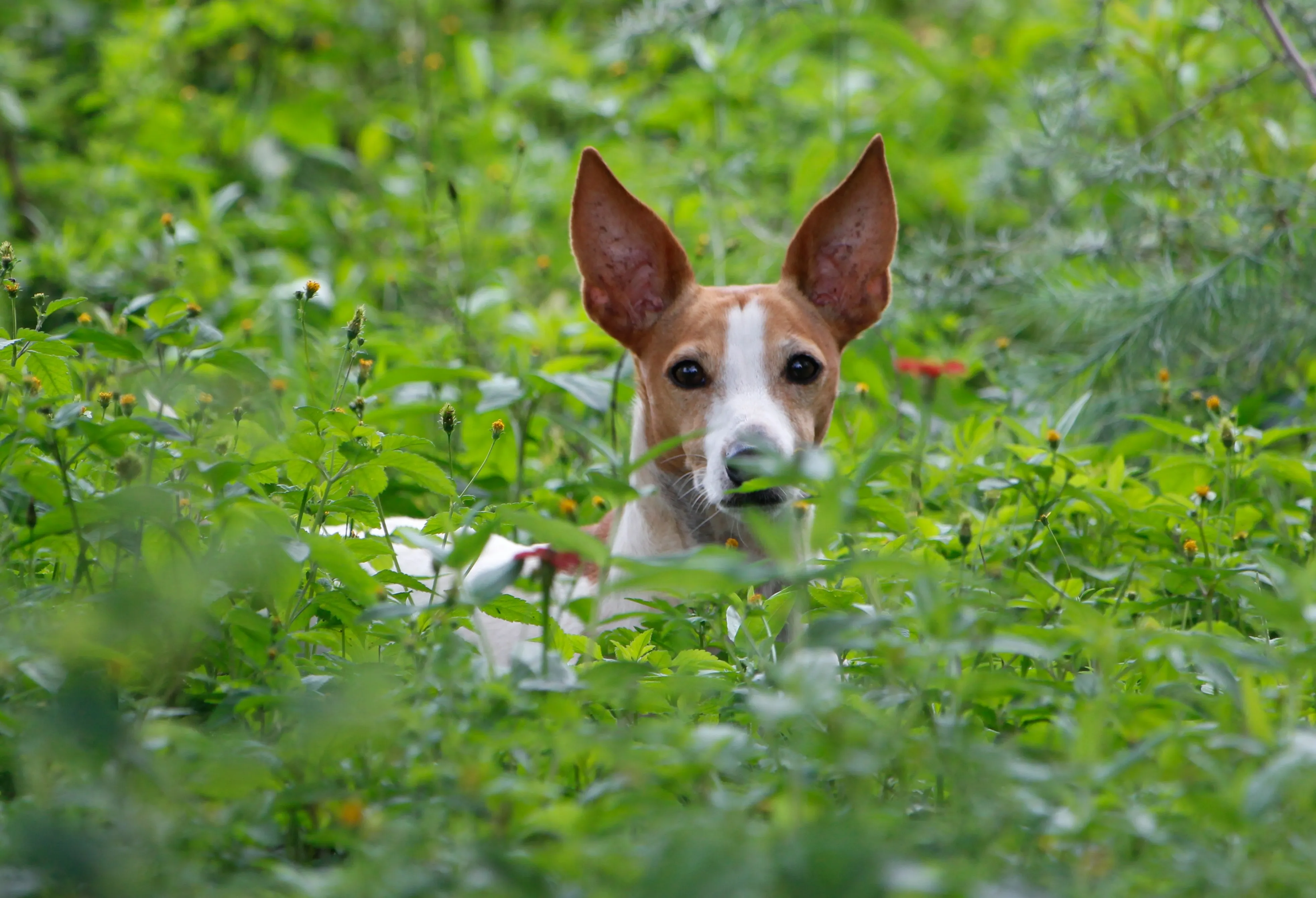
A dog's ears are a particularly important visual signal and can reveal a lot about its mood or intention. Since dogs can actively move their ears, their positions change very noticeably depending on their emotional state.
Meaning of the different ear positions:
- Neutral position: a sign of calm and relaxation.
- Forward-facing, stiff: expression of attention or excitement—in some contexts also an indication of possible aggression.
- Facing backward: a typical sign of fear, insecurity, or submission. Often accompanied by a crouched body, tucked tail, or averting of gaze.
Interpreting canine vocal signals correctly: panting, growling, etc.
The mouth is a central component of canine body language and provides important clues as to how a dog is feeling. Many signals are easily recognizable to humans. They are comparable to our own facial expressions, as we too often read emotional states from facial expressions.
- Panting: primarily serves to regulate body temperature (to cool down), but can also be a sign of anxiety, stress, or pain—especially when it occurs in a calm environment without heat.
- Licking lips, clicking tongue: uncertainty, appeasement. This subtle signal shows that the dog wants to de-escalate a situation or reduce stress. It is often seen in new, unpleasant, or overwhelming situations.
- Yawning: can indicate actual tiredness, but is also used as a calming signal. Often observed during training, visits to the veterinarian, or when under social pressure.
- Growling + lips raised (teeth showing): warning, sign of aggression, or fear. This combination is a clear sign that the dog wants to be left alone.
- Growling (in the game): can be meant playfully. Caution: consider the context.
- Submissive grin: they pull back their lips and show their teeth—but without growling and without aggressive body signals. This behavior initially appears threatening to many people, but is usually an expression of submissiveness, social appeasement, insecurity, or tension.
- Licking: Many dogs lick their owners when greeting them or during close interactions. This behavior can be an expression of social bonding, a greeting ritual, or a sign of appeasement and friendliness.
However, if a dog licks very intensely or exuberantly, this can also indicate displacement behavior—a sign of excessive excitement or insecurity. In such cases, it is worth encouraging calm and structured greeting rituals so that the dog can better maintain its inner balance.
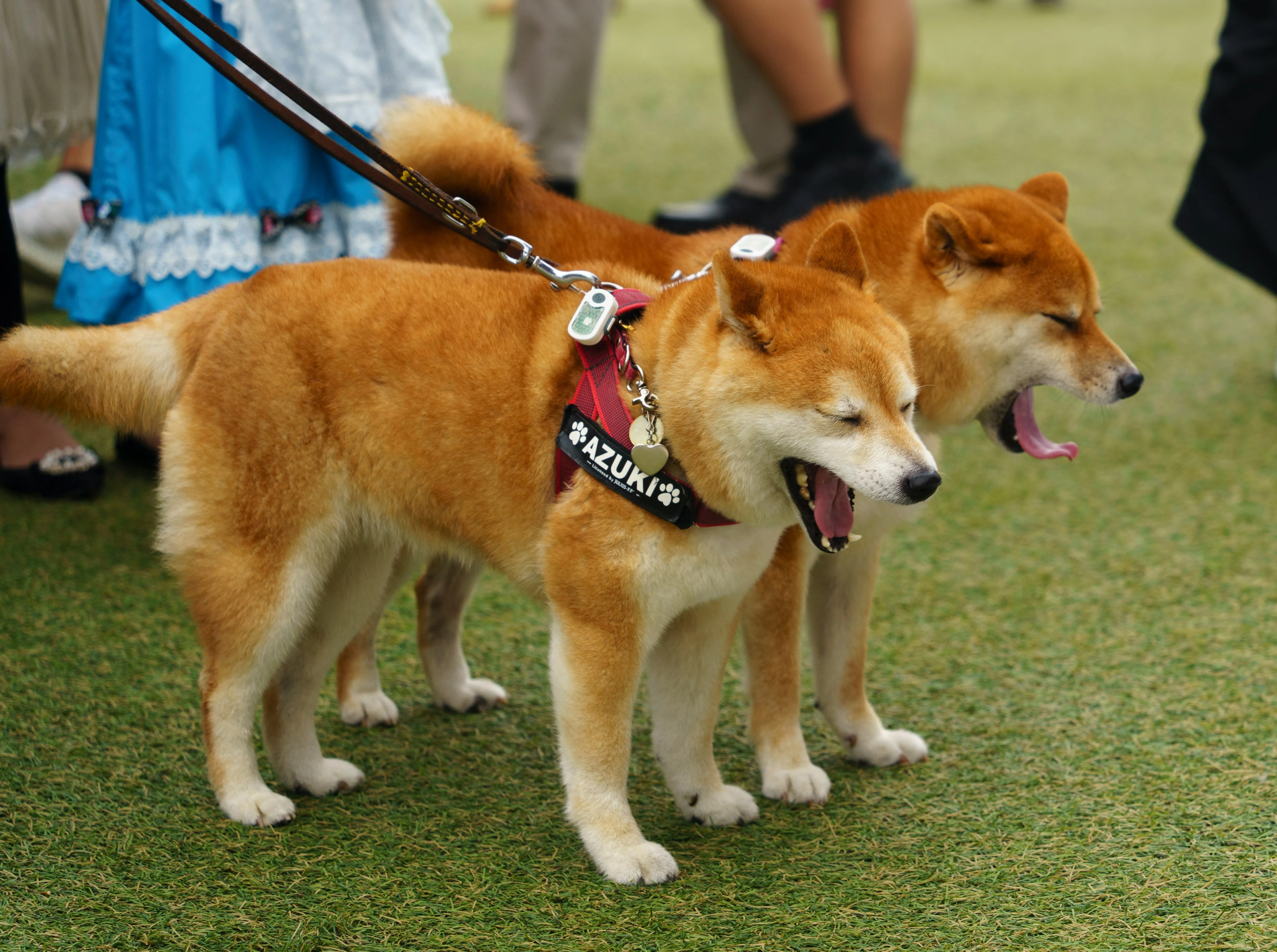
Nudging – a quiet but meaningful contact
Nudging with the snout is considered a meaningful element of dog language. In behavioral biology, this behavior is described as a form of tactile interaction that serves to attract attention or initiate social contact. It is often a polite way of making contact—a kind of "I'm here" or "please notice me." This behavior is particularly widespread in the context of greetings and is an expression of social closeness.
At the same time, nudging can also indicate a certain degree of uncertainty. In situations that are difficult for a dog to assess, it sometimes seeks guidance or confirmation through direct physical contact. The nudge then appears more reserved, the body tension slightly higher, and the gaze more expectant.
As with many signals in dog language, context plays a crucial role here: if the dog appears calm and curious, nudging tends to indicate friendly interaction. If it appears tense or uncertain, it is a request for contact that needs additional support or reassurance. Anyone who wants to understand dogs should always interpret this nonverbal communication in the overall context.
Vocal communication – the "audible language" of dogs
The vocal communication of dogs is varied and fulfills very different functions depending on the context. While some sounds can be clearly identified, others can have different meanings depending on the situation. It is always important to observe body language as well.
- Barking: Alarm, excitement, frustration, play, fear. Barking is the most commonly used vocal signal in domestic dogs and serves both as a warning and a means of establishing contact—its meaning depends greatly on pitch, duration, and situation.
- Howling/howling: Stress, loneliness, communication over distance. Howling is a remnant of wolf ancestry and enables social bonds to be maintained or group members to be located.
- Whining: Insecurity, desire for attention, or pain. Whining is particularly common in young dogs and indicates a need for support or closeness. In adult dogs, it can also indicate discomfort or pain.
Did you know that the Basenji cannot bark due to the unique structure of its larynx? Instead, it produces a characteristic sound that is often described as "yodeling."
Smell & pheromones—signals imperceptible to humans
Largely invisible to us humans, but crucial for dogs. Dogs mark their territory (urine, feces, anal glands) to convey information about their gender, reproductive status, mood, and territory. This form of animal communication works even over long distances and time lags.
Body language – the key to your dog's mood
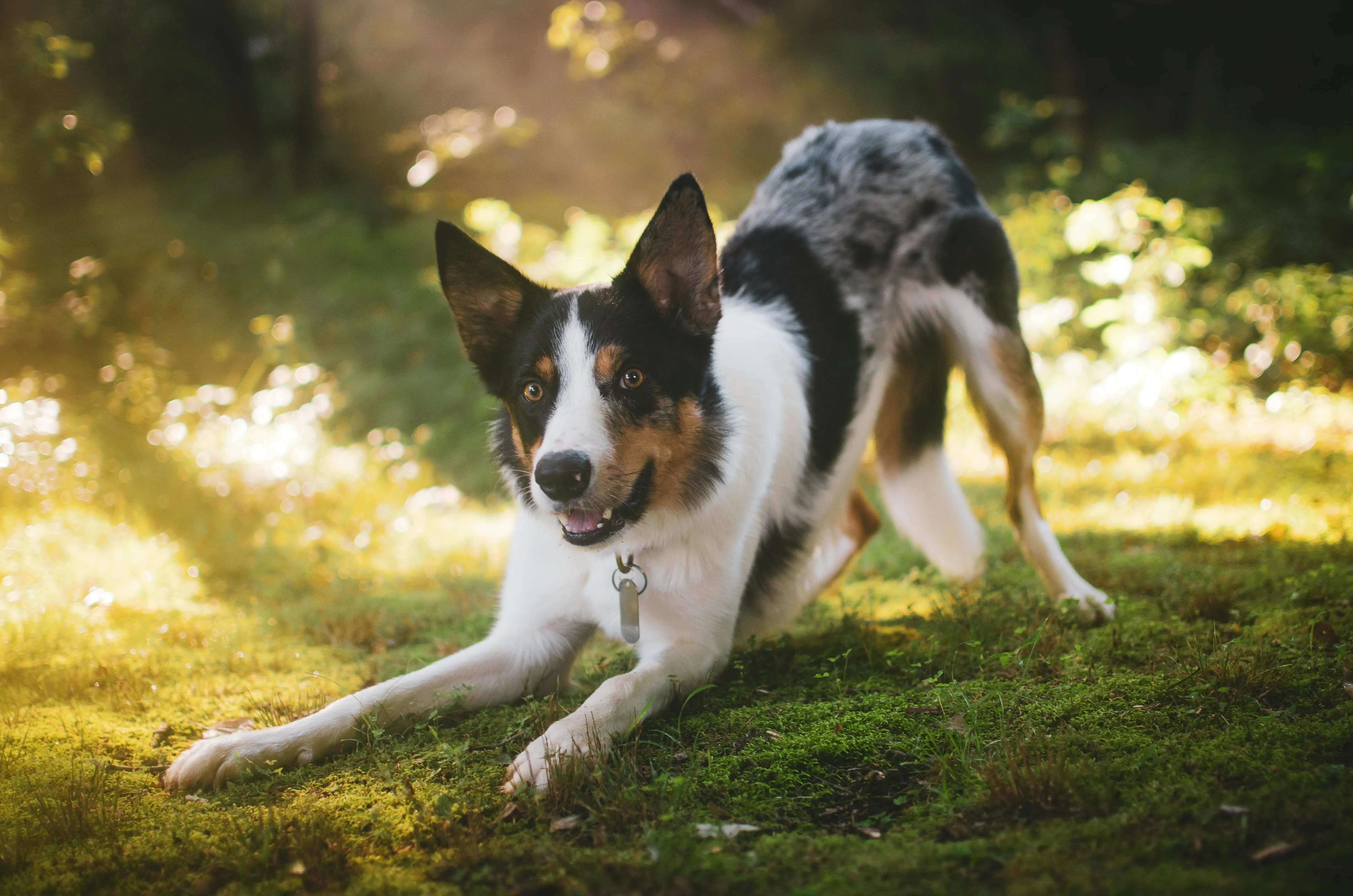
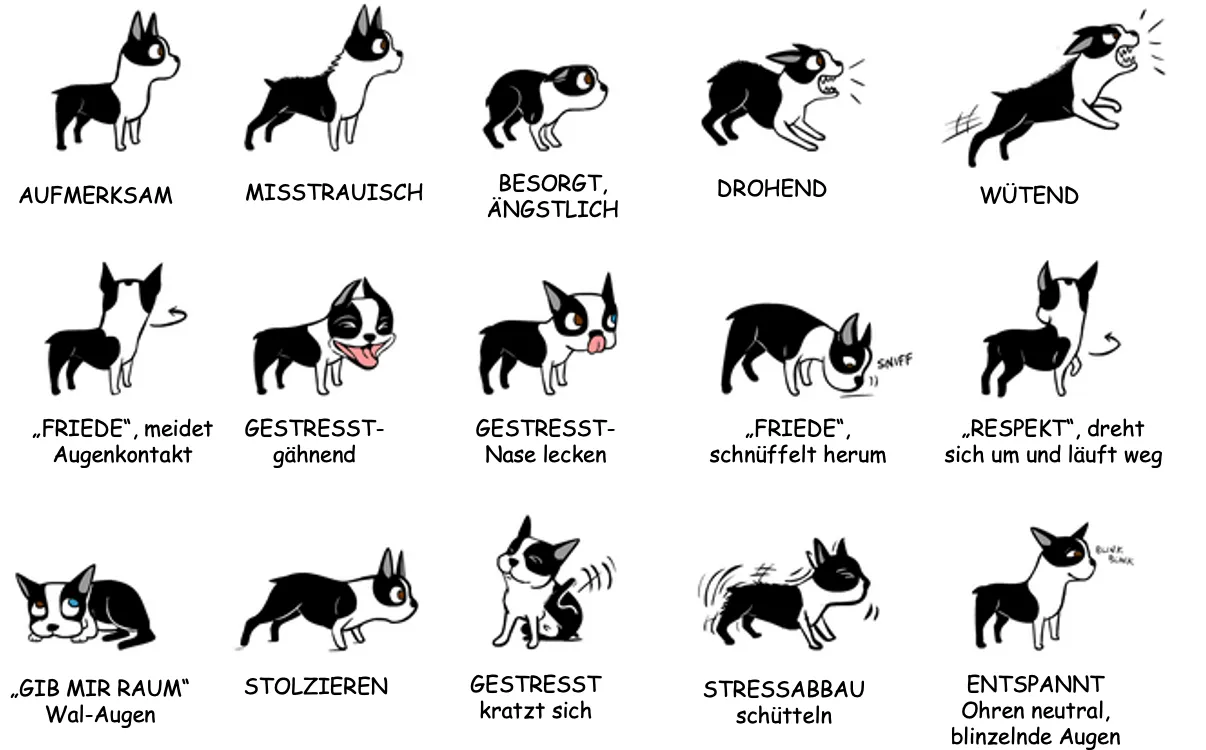
Body language is one of the most important elements of canine communication. It often reveals at first glance how a dog is feeling and what its intentions are. Many of these signals are easy to recognize if you know what to look for.
- Relaxed posture: Calm and well-being. The dog appears relaxed overall: its muscles are relaxed, its movements are smooth, and its body is slightly curved. A relaxed dog shows neither tension nor a fixed line of sight.
- Tense, stiff posture: alertness, excitement, or possible aggression. A dog that suddenly becomes stiff often fixes its gaze on something in its surroundings. Its muscles are tense, and its movements appear controlled or slowed down. This posture can indicate both positive excitement (e.g., anticipation) and the onset of a conflict situation.
- Hair standing on end (piloerection): alertness or strong emotional arousal. Hair standing up along the back indicates increased arousal. This does not necessarily mean aggression—fear or insecurity can also trigger piloerection. The overall context is important.
- Showing their belly: Submissive behavior or great trust. When a dog shows its belly, this can be a clear sign of submission—an attempt to avoid conflict. In familiar situations, such as with caregivers, showing their belly can also be a sign of security and well-being.
Are you unsure whether your dog has a behavioral problem?
It is often worthwhile to get an initial assessment before concerns become more serious. Sometimes it is actually a behavioral disorder, but often it is simply a misunderstanding in communication between humans and dogs.
As a Calingo customer, you can reach a veterinary professional around the clock—24/7—simply via chat, phone, or video and without an appointment (just use the telemedicine button at the bottom right). This gives you quick clarity, expert advice, and concrete next steps—exactly when you need them.
Are there dogs that are more difficult to "read"?
Yes – both for us humans and for other dogs, there are breeds whose body language is more difficult to interpret. Brachycephalic dogs (short-headed breeds) such as pugs, French bulldogs, and Shih Tzus in particular have limited facial expressions due to their anatomy. Their shortened snout means that they lack a large part of the fine facial muscles that are important for typical canine expressions. In addition, many short-nosed dogs make breathing and wheezing noises that laypeople can easily mistake for growling. Other dogs can also misinterpret these noises or unfamiliar facial expressions, which can lead to social insecurity. Fortunately, despite being difficult to read, many of these dogs are often extremely gentle, friendly, and socially compatible.
Which dogs are particularly easy to read—and suitable for beginners?
There are breeds whose body language is particularly clear, friendly, and unambiguous. These dogs are considered "beginner dogs" because they are easy to train, can usually be socialized well, and have a stable, friendly nature.
These breeds include:
- Havanese
- Maltese
- Bichon Frisé
- English Cocker Spaniel
- poodle
- Labrador Retriever
- Golden Retriever
- Bernese Mountain Dog
Of course, there are always individual differences—every dog has its own personality profile. Having a dog language translator in your head—that is, consciously reading nonverbal communication—helps you understand dogs, regardless of breed or age.
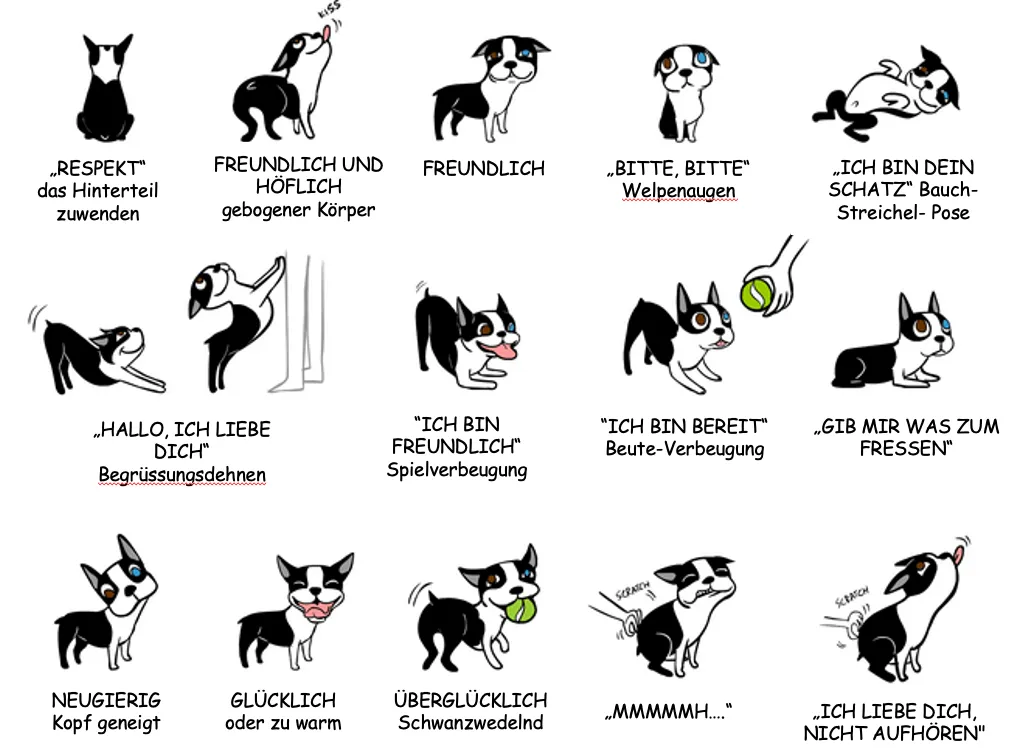
Harmonious coexistence – regardless of breed
Whether someone has an easy-going beginner dog or a dog with a strong will of its own, the key is that both human and dog learn to speak the same "language."
Note: It is often particularly difficult for young children to correctly understand dogs' body language. Here you can learn how they can behave safely and respectfully around dogs (Dog Codex).
The most important principles:
- Learning their language – recognizing body language and moods
- Listen with your eyes—pay attention to body tension, gaze, ears, and tail
- Avoid misunderstandings—for example, "tail wagging = happiness" is a common misconception.
- Developing a common language – clear, consistent signals in everyday life
- Have realistic expectations—a dog does not think or feel like a human being.
Only when we begin to truly understand our dogs' language can a trusting and relaxed relationship develop. As a little introduction, there is an interesting article by SRF that deals with precisely this topic.
Does Calingo cover the costs of behavioral therapy?
Yes—treatment and veterinary costs related to behavioral disorders are covered by Calingo as part of the selected coverage (details according to the General Terms and Conditions of Insurance—by a recognized behavioral veterinarian). Put together dog insurance for your furry friend here.

Typical signs of stress include licking the lips, yawning, looking away, tense posture, trembling muscles, tucked tail, and rapid panting.
This can be submission or first-class trust. The context is crucial: if the dog is relaxed, it is usually a feeling of well-being. If it is tense, it is more likely to be submissive behavior.
No. Tail wagging simply means that the dog is ready to interact. The meaning depends on the height, stiffness, and speed of the wagging.
Common signs include: tucked tail, ears laid back, dilated pupils, crouched posture, hiding, or retreating.


Fall Hikes with Your Dog: Our Most Beautiful Trails in Switzerland

Pumpkin for Your Furry Friend: A Healthy Snack?

Back from Vacation: Recognizing Separation Anxiety in Your Pet
From pet parents for pet parents
The health of your furry nose is our job


