

Senior Pets in the Fall: How to Recognize Joint Pain in Dogs and Cats
Is this causing him pain, or is he just getting older? With our 2-minute joint check, you can identify joint pain in dogs and cats and learn what you can do for your senior pet this fall.

He used to be on the sofa in three strides. Now your cat stands in front of it, looks up, pauses for a moment, and walks away. Or your dog: He no longer shoots out of his bed like a bolt of lightning in the morning, but stands there for a moment before getting up and moving around.
Is it just his age, or is something hurting him?
This is exactly the question many pet owners ask themselves when it gets cooler and wetter in the fall and their furry friend suddenly seems stiffer. In this guide, you’ll find a 2-minute joint check you can do at home, a list of questions to ask at the vet’s office, and tips on how to help your senior pet get through the cold season. By the way, dogs are considered senior starting at about 7 to 10 years old, depending on their size, and cats starting at about 10 years old. More important than age, however, is what you observe in your pet.
Why do joints cause more problems in the fall?

Fall can be tough: cold, wet weather, slippery leaves on the walking path, the heat comes back on, and after the time change at the end of October, the evenings get darker and walks get shorter. Many pet owners report that their older pets seem stiffer in cold and wet weather and take longer to warm up after lying down. Less exercise further weakens the muscles that support the joints.
But the weather isn’t the cause—it just makes what’s already there more apparent. In older pets, osteoarthritis is very often the underlying cause: The cartilage that protects the ends of the bones like a cushion slowly breaks down, causing the joints to rub against each other and become painful. It particularly affects large dog breeds such as Labradors, Golden Retrievers, and German Shepherds. In cats, osteoarthritis often goes undetected for a long time because they are so good at hiding their pain. According to estimates, more than half of cats over the age of six are affected. The good news is that while osteoarthritis cannot be cured, it can be effectively managed.
Is that still normal, or does it hurt?
It’s usually noticeable earlier in dogs. Your dog gets up hesitantly, feels stiff after lying down, and doesn’t warm up until after a few steps. He avoids stairs, hesitates before jumping into the car, or lags behind on walks. Some dogs lick or nibble at their sore joints.
With cats, the signs are more subtle. Has your feline stopped jumping onto the sofa or windowsill and started choosing lower spots instead? Does she hesitate in front of a litter box with high sides, groom herself less—making her fur look shaggy—or withdraw more often?
People often say, “That’s just part of getting older.” But these changes are very often signs of pain, and they can be treated. Stiffness isn’t something you’re just supposed to put up with.
The 2-Minute Joint Check at Home
All you need is two minutes and your attention. It’s best to observe your pet during its normal daily routine—for example, in the morning when it gets up. First, watch how your pet gets up; then, watch it walk about 20 steps on level ground; and finally, watch what it does when facing stairs or a jump. Important: Don’t force your pet to do anything. The point is simply to see what it does on its own. Check the box if a statement applies.
For Your Dog
- He gets up hesitantly after lying down, or it takes him several tries.
- It feels stiff at first, but it loosens up after a while.
- He limps, is favoring one leg, or hops on three legs.
- He avoids stairs or walks up them with obvious caution.
- He hesitates before jumping into the car or onto the sofa, or he doesn't jump as far as he used to.
- He lags behind on walks, wants to take shorter walks, or is unusually tired afterward.
- He reacts sensitively when you touch him in certain places (flinching, licking, snapping).
For Your Cat
- She hesitates before jumping onto the sofa or the windowsill, or chooses lower spots.
- It no longer goes all the way in one go, but makes stops along the way.
- She walks up stairs slowly or avoids them.
- She hesitates before stepping into the litter box or sometimes misses it.
- She grooms herself less, and her fur looks shaggy or matted.
- She seems stiff after sleeping or moves cautiously when getting out of bed.
- She has become more withdrawn, plays less, or reacts irritably when touched.
So what now? Every mark is a good reason to bring up the issue during your next visit. If there are multiple marks, or if your pet reacts with pain when touched, make an appointment as soon as possible. This check isn’t a substitute for a diagnosis, but it gives you and your veterinarian something concrete to go on. Repeat it every few weeks and note any changes.
Our video tip: Film your pet in its usual environment as it stands up, walks, and jumps. Cats, in particular, are often so stressed at the vet’s office that they move very differently than they do at home. A short video helps the veterinarian get a realistic picture of your pet’s condition. You can also use this video when consulting our online veterinarian .
What can help your senior loved one with daily life in the fall?
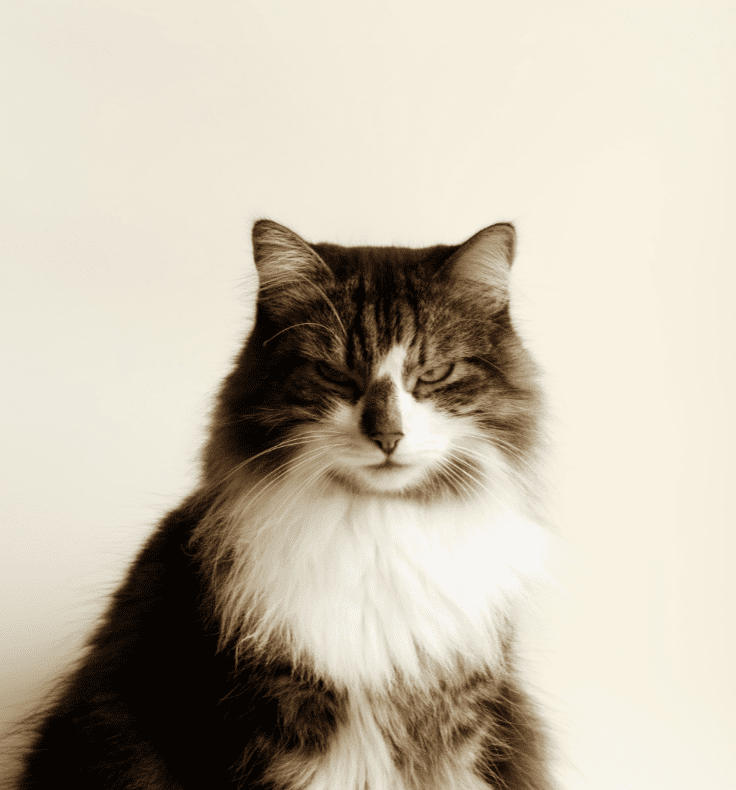
Even small adjustments can make a big difference. Now that the heat is back on, the warmest, draft-free spot belongs to your senior cat—preferably with an orthopedic bed. Warmth can help relieve stiffness. For cats, heated beds or heating pads are a great solution, as long as nothing gets too hot. On hardwood or tile floors, non-slip rugs provide traction, and a small ramp into the car or onto the sofa saves your dog from having to jump. For cats, steps leading to their favorite spots, a litter box with a low entrance, and food and water bowls at a comfortable height are helpful.
By the way, taking it easy isn’t the solution, because exercise keeps the muscles active, and strong muscles take the strain off the joints. Several short, leisurely walks are better than one long, strenuous walk—preferably on solid ground rather than on wet, slippery leaves. After a walk in the rain, give your dog a thorough rub-down to dry him off, and dogs that are sensitive to the cold will appreciate a coat. You can get cats moving with gentle play on the floor, such as using a feather teaser.
And then there's the issue of weight: Every extra kilo puts strain on the joints and can make existing pain worse. Even a small amount of weight loss can noticeably relieve the symptoms. Talk to your veterinarian about the right food.
How does a veterinarian treat osteoarthritis?
Osteoarthritis cannot be cured, but it can be treated very effectively. The goal is for your pet to go about its daily life with as little pain as possible. A combination of treatments works best: The cornerstone is usually pain management with anti-inflammatory medications, which your veterinarian prescribes specifically for dogs or cats and monitors through regular checkups. This is supplemented by physical therapy—including hydrotherapy for dogs—as well as osteopathy or acupuncture. Dietary supplements such as omega-3 fatty acids can also help. The evidence supporting their effectiveness varies, so it’s best to discuss the dosage with your veterinarian. In very advanced cases, surgery may also be an option.
Very important: Never give your pet pain relievers from your home medicine cabinet. What helps us humans can be dangerous—and in some cases even life-threatening—for dogs and cats.
Three questions for Natacha Stuck, DVM, of the Marigin Practice in Pfäffikon SZ:
What pain signals do pet owners most often overlook?
Our pets often show signs of pain in quiet and subtle ways. Cats may stop jumping on the sofa as often, groom themselves less, and withdraw. Dogs may take longer to get up, move a little more stiffly, or no longer want to go on long walks. Excessive licking of a specific area of the body can also be a sign of pain.
What can you do to make your dogs and cats more comfortable at home?
Regular but gentle exercise—this strengthens the supporting muscles, keeps the joint moving, and thereby also promotes the production of synovial fluid. A warm, comfortable sleeping surface, preferably with orthopedic foam, prevents the joints from resting on a hard surface while still ensuring they do not sink in completely. Gentle massages can relieve tension and improve mobility.
What is your most important piece of advice for the fall?
Don't wait too long if you notice new symptoms; it's better to talk to your veterinarian sooner rather than later. The sooner treatment begins, the more effective it will be.
And please never give your pet pain relievers from your home medicine cabinet without consulting your veterinarian first—these can be dangerous for dogs and cats.
Our tip: Did you know that Calingo pet insurance also covers the costs of complementary medical treatments such as physical therapy, osteopathy, and acupuncture?
When should you go to the vet, and what should you ask her?
If your pet has been limping for several days, reacts painfully when touched, is barely moving, or suddenly refuses to eat, it’s time for a checkup. The same goes if several red flags show up during the joint check. To make the most of your appointment, it helps to be well prepared. It’s best to bring a short video, your notes (how long this has been going on, when it’s particularly bad), a list of food, supplements, and medications, and your pet’s current weight. And bring these questions with you to the appointment:
About the Diagnosis
- What is your diagnosis, and how will we confirm it (examination, X-ray)?
- Which joints are affected, and how advanced is the condition?
About the Treatment
- What options are available (pain management, physical therapy, osteopathy, acupuncture, surgery), and where should we start?
- Which pain reliever should we give, for how long, and what are the possible side effects and follow-up checks?
- What should I absolutely never feed my pet?
Everyday Life
- Is my pet at a healthy weight? If not, what target weight and what food do you recommend?
- How much and what kind of exercise is good for us, and what should we avoid?
- What adjustments can I make at home (sleeping area, floors, ramp, litter box)?
- Are dietary supplements beneficial, and what is the recommended dosage?
About the Process and Costs
- How can I tell if things are getting better or worse, and when do we need a follow-up visit?
- What costs should I expect (checkups, medications, treatments)?
- Can you issue the invoice so that I can submit it to my insurance company?
How much does osteoarthritis cost, and what does insurance cover?
Joint problems in older pets rarely require just a single visit to the vet. Most often, they involve checkups, long-term medication, and physical therapy—and the costs really add up.
At Calingo, there is no age limit. You can insure your dog or cat starting at 8 weeks of age, even into their senior years, and the premium remains constant—it does not increase with age. Complementary medicine, such as physical therapy and osteopathy, is covered up to CHF 1,000, 1,500, or 2,500, depending on the coverage level.
So you won't be caught off guard later, here's what you should know:
- If your pet was diagnosed with or treated for osteoarthritis within the last 24 months, it is considered a pre-existing condition. You can include it in your coverage through the “Pre-existing Conditions” supplemental coverage.
- If osteoarthritis develops only after the policy has taken effect and the 30-day waiting period has expired, it is considered a newly diagnosed condition.
- Starting at age 10, you'll be responsible for at least 20% of the veterinary costs.
Are you already insured with us? If so, you can easily submit your vet bill through our customer portal.
Our tip: Not sure if this is just a normal age-related issue? With Calingo Telemedicine, you can reach veterinarians 24/7 via chat, phone, or video—with unlimited access and no appointment needed. It’s not a substitute for a visit to the vet’s office, but it gives you a quick initial assessment.
Growing older is a natural part of life, but pain doesn’t have to be. If you pay close attention, talk to your veterinarian early on, and make a few adjustments to your daily routine, your senior pet will still enjoy being active well into the fall—whether it’s a walk through the woods or a stroll to the sofa. And if you’re worried about the costs: At Calingo, there’s no age limit, the premium stays the same, and the sooner you get coverage, the fewer pre-existing conditions you’ll have to deal with later. You can see how much coverage for your furry friend costs in just a few clicks.

Dogs often get up hesitantly, feel stiff after lying down, avoid stairs, or hesitate before jumping into the car. With cats, the signs are more subtle: they no longer jump onto the sofa or windowsill, groom themselves less, avoid litter boxes with high sides, or withdraw. With our 2-minute joint check, you can observe these signs at home in just a few minutes.
The weather doesn't cause osteoarthritis, but many animals seem stiffer in cold and wet weather. A warm resting spot, non-slip flooring, and several short walks can help. If your pet is limping for several days, you should always see a veterinarian.
No. Many pain relievers intended for humans are dangerous for dogs and cats—and in some cases, even life-threatening. Only give your pet medications that your veterinarian has prescribed.
If osteoarthritis develops after you take out the policy and the 30-day waiting period has ended, it is covered as a new condition. If it has already been diagnosed or treated within the last 24 months, it is considered a pre-existing condition. For this, you’ll need the “Pre-existing Conditions” supplemental coverage, which you must select when you take out the policy. Complementary medicine, such as physical therapy and osteopathy, is covered depending on your coverage level.
Yes. Calingo has no age limit: You can insure your dog or cat starting at 8 weeks of age, even if they’re senior pets. The premium remains constant and does not increase with age. Starting at age 10, you’ll be responsible for at least 20% of the veterinary costs.


Tick Prevention in the Fall: Why Tick Season Isn't Over Yet
Ticks, fleas, and worms: Everything you need to know about parasites

Vaccinating my cat: what you should look out for
From pet parents for pet parents
The health of your furry nose is our job


