

Heated Air and Water Bowls: Is Your Cat Drinking Enough in the Winter?
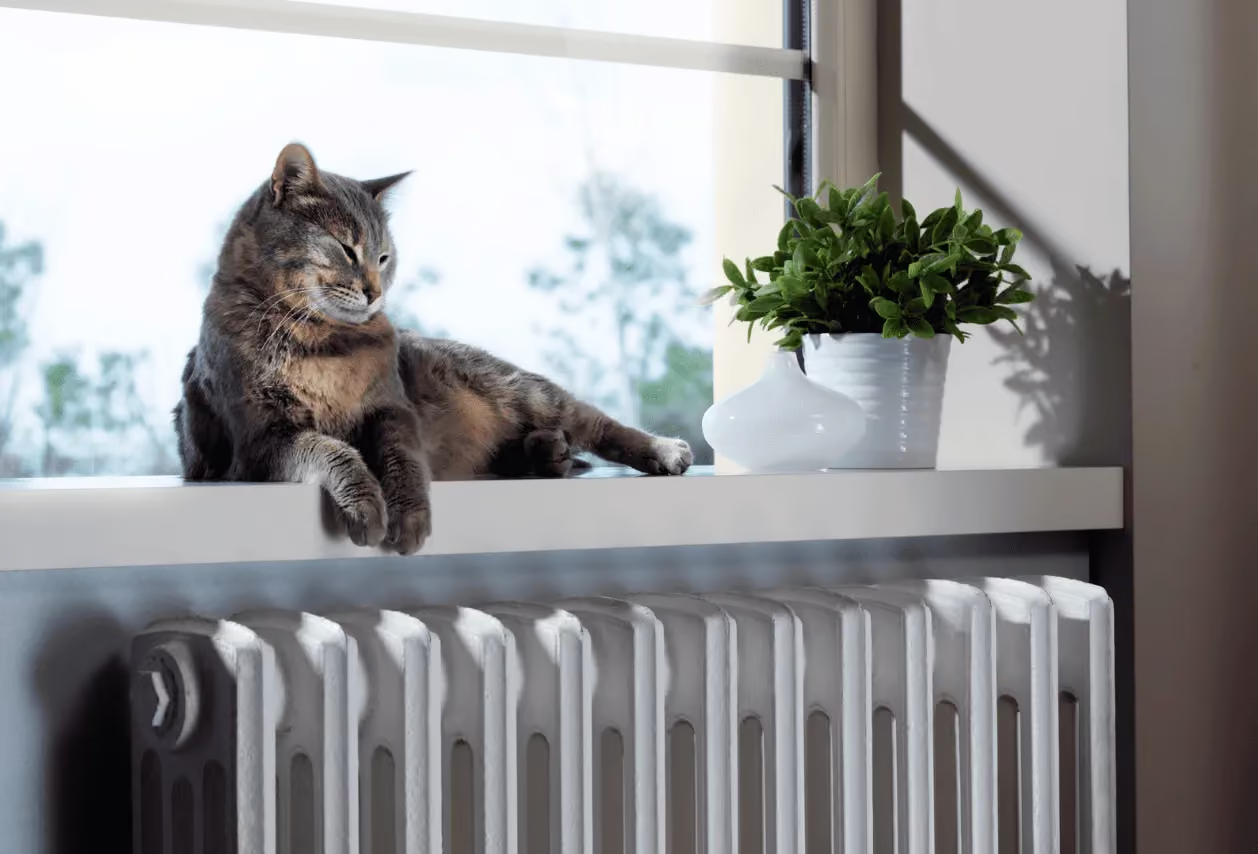
The heater is on, your cat has found its favorite spot right next to it, and the water bowl remains almost untouched? Cats really aren’t big drinkers, and this tendency often becomes even more pronounced in the winter. We’ll show you why not drinking enough water can affect the bladder and kidneys, what warning signs to look out for, and what tricks you can use to get your feline friend to drink more again.
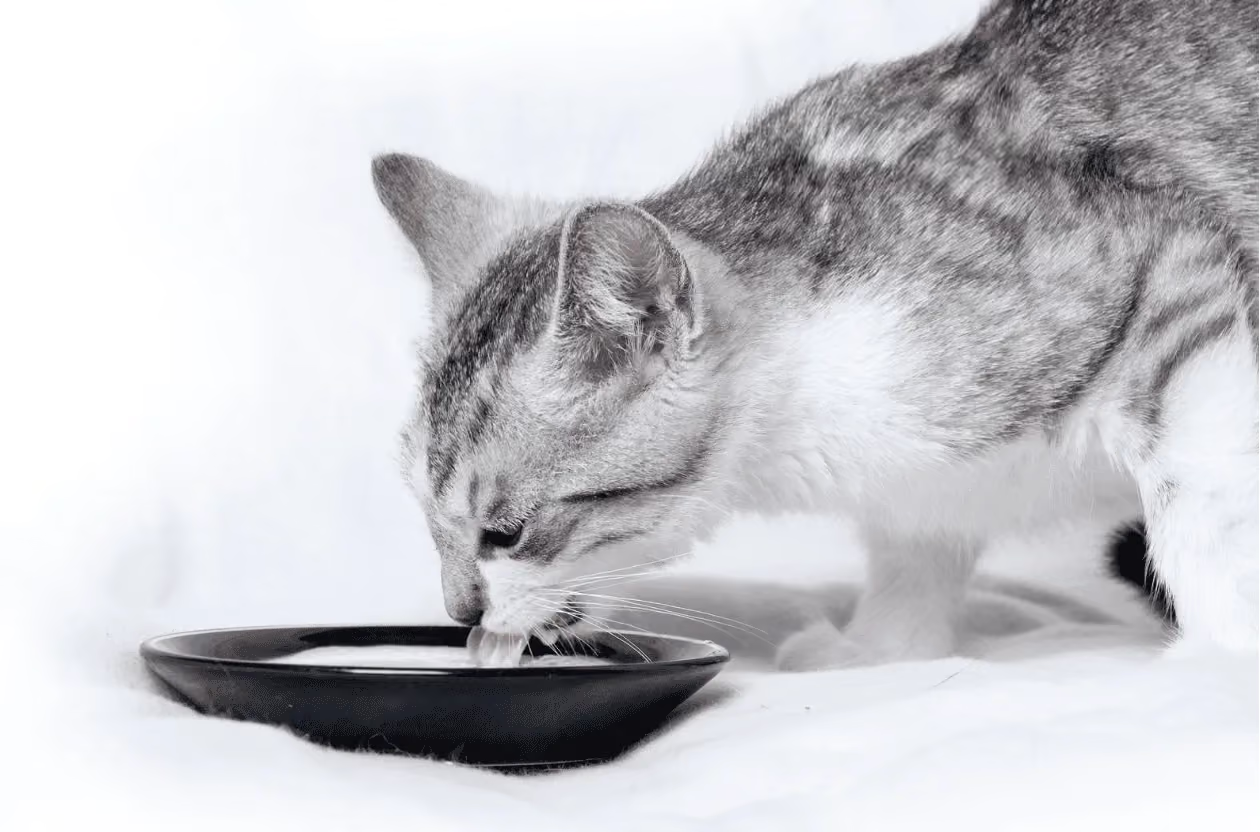
Born Not to Drink
There’s a reason your cat hardly ever drinks: Its ancestors lived in arid regions and got most of their fluids from their prey. That’s why cats rarely feel thirsty the way we do. The problem is that our house cats no longer eat mice; instead, they often eat dry food, which contains only about 7 to 10 percent water.
As a rule of thumb, a cat needs about 50 to 60 milliliters of water per kilogram of body weight each day. For a cat weighing four kilograms, that amounts to about 200 to 240 milliliters—roughly one large glass. Some of this comes from its food; the rest it must drink.
Why Winter Doesn't Make It Any Easier
In winter, several factors come into play at once. The dry air from the heating system dehydrates the body, while your cat often moves around less and sleeps more. Cats that usually go outside prefer to stay indoors when it’s cold and rainy, which can also be stressful for some cats. Less exercise, reduced water intake, and stress are considered major risk factors for bladder problems. So these are good reasons to keep a close eye on the water bowl right now.
What Happens to Your Bladder and Kidneys When You Don't Drink Enough Water
If your cat doesn’t drink enough, its urine becomes more concentrated. This can make it easier for crystals or urinary stones to form, and the bladder can become inflamed. Lower urinary tract diseases are among the most common reasons for a vet visit in cats. Stress often plays a bigger role in this than bacteria. Experts refer to this as idiopathic cystitis. Indoor cats, overweight and less active cats, and cats in multi-cat households are particularly affected.
It’s especially dangerous for male cats: Their urethra is long and narrow and can become blocked by crystals or inflammatory debris. A urinary obstruction is a true emergency that can become life-threatening without prompt treatment. And in older cats, the kidneys are also put under greater strain over time if they don’t get enough fluids.
Warning Signs: When You Should Take Action
Observe your cat’s behavior around the litter box. Does she go there frequently but only produce small amounts? Does she strain, meow while doing so, or do you notice blood in her urine? Has she suddenly started urinating next to the litter box, or is she licking her genital area noticeably often? All of these are signs of a bladder problem that should be evaluated by a veterinarian.
Important: If your cat is straining but no urine is coming out, don't wait. Take him to a veterinarian's office or emergency clinic immediately, even at night or on the weekend. Of course, Calingo will also cover the costs in the event of an emergency.
Not sure if it's an emergency, or do you have general questions about your pet's health? As a Calingo customer, you get free, unlimited online veterinary advice —24/7
Seven Tips for Getting More Water in the Bowl
The good news: With a few tricks, you can even get die-hard non-drinkers to have a drink.
- Multiple water stations: Set out two or three bowls around the apartment so there's always one nearby.
- Away from the food and the litter box: Many cats don't like to drink right next to their food bowl, and certainly not next to the litter box.
- Wide, shallow bowls: Cats don't like it when their whiskers touch the rim. Glass or ceramic are ideal.
- Fresh water: Change the water every day. However, some cats prefer water that’s been sitting for a while. See what your cat likes.
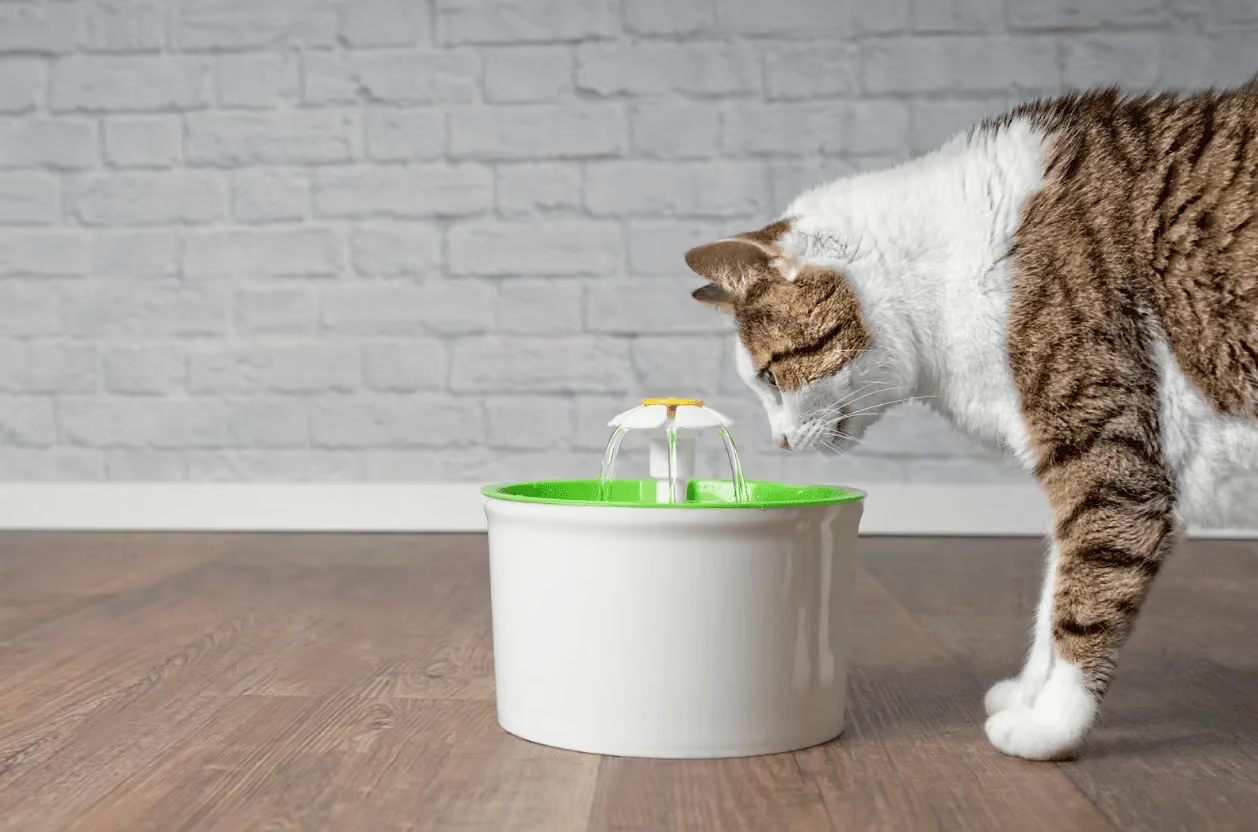
- Moving Water: A drinking fountain sparks the playful instincts and curiosity of many cats.
- Wet food: It consists mostly of water. Even just one serving of wet food a day makes a difference.
- Add a little water to the food: Most cats won't even notice a splash of lukewarm water in their wet food.
You can learn more about what a balanced cat diet looks like in our guide, " How Do I Feed My Cat Properly?"
What about you? Heated air affects you, too
Dry eyes, chapped lips, a scratchy throat in the morning: The dry air from the heater is getting to you, too. The Federal Office of Public Health (FOPH) recommends a humidity level of about 30 to 50 percent during the heating season—and closer to 40 percent on very cold days—to prevent mold from forming. This includes airing out the room thoroughly three times a day for five to ten minutes instead of leaving windows in the tilt position. A good indoor climate is also good for your cat, because very dry mucous membranes are more susceptible to infections like cat flu. And while you’re refilling your cat’s water bowl: a glass of water for yourself won’t hurt either.
Our tip: Is your cat using the litter box unusually often, or suddenly drinking much more than usual? As a Calingo customer, you can contact our online veterinarian 24/7 with no limits to determine how urgent a visit to the vet is.
A full water bowl is a simple but important step in keeping your cat healthy. And if your cat does develop bladder problems, you'll be well covered with Calingo Cat Insurance.

As a rule of thumb, cats need about 50 to 60 milliliters per kilogram of body weight, including the water in their food. Cats that eat a lot of wet food therefore often drink significantly less from their water bowl, and that’s perfectly fine.
No. Many adult cats have trouble digesting lactose and experience diarrhea as a result. Water is and always will be the best drink for your cat.
It's not necessary, but many cats prefer to drink from a fountain. If your cat isn't drinking enough, it's worth a try. Be sure to clean it regularly.
A sudden, significant increase in thirst can be a sign of conditions such as diabetes, kidney disease, or an overactive thyroid. Please have this checked out by a veterinarian.



Zoonoses: What Your Furry Friend Can and Can't Share With You

Healthy with Your Furry Friend: How Dogs and Cats Are Good for You

Senior Pets in the Fall: How to Recognize Joint Pain in Dogs and Cats
From pet parents for pet parents
The health of your furry nose is our job


