

Dutch Shepherd Dog
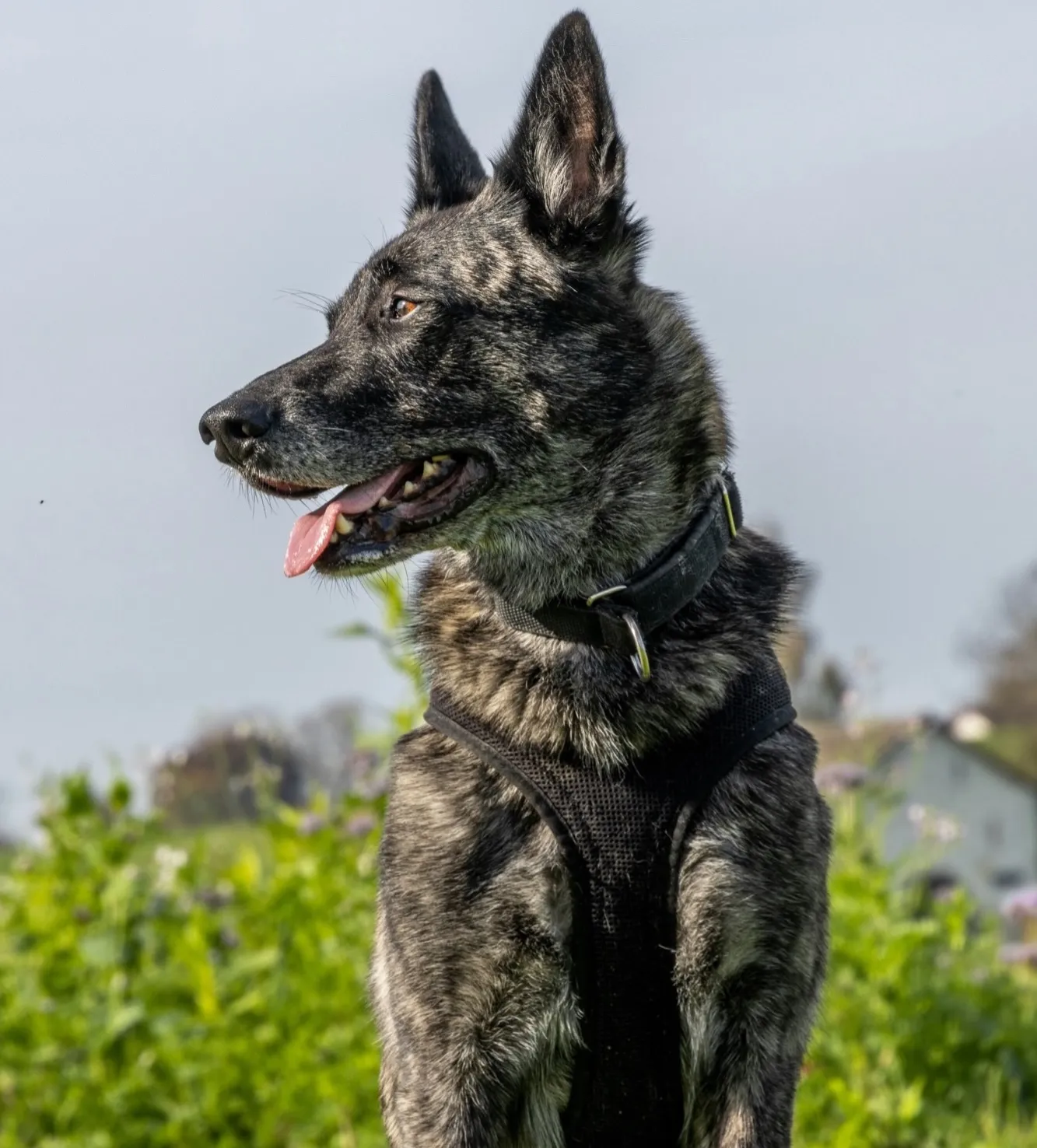
The Dutch Shepherd Dog—also known as the Herder—is characterized by high intelligence, a strong work ethic, and great performance. Originally bred in the Netherlands, it is now also used in Switzerland in a variety of ways, for example as a service dog for the police and military, a rescue or sporting dog, and as a family dog for experienced dog owners.

Herding and driving dog
.webp)
12 - 15 years

♀ 55 - 60 cm
♂ 22–24 inches

♀ 25 - 35 kg
♂ 30 - 40 kg

Personality
Trainability
Need for exercise
Suitable for families
Suitable as a beginner dog
Average health
Affection for people
Character and behavior of a Dutch Shepherd Dog
The Dutch Shepherd is a very intelligent and active dog. It enjoys working with its owner and forms a close bond. The herder is attentive, alert, and sensitive to its surroundings. Therefore, it needs calm, clear, and consistent training. It has a lot of energy and needs daily exercise and mental stimulation. With good training and leadership, it is a well-balanced, loyal, and reliable companion.
Training and raising a Dutch Shepherd
The Dutch Shepherd is very quick to learn and eager to work, which is why consistent training is particularly important for this breed. It is not considered a dog for beginners, as it can quickly develop problematic behavior in inexperienced or unsuitable hands. Daily mental and physical exercise is essential for this breed. It is easily enthusiastic about a wide variety of activities, including mantrailing, obedience, agility, IGP, bikejoring, canicross, and much more.

Is the Dutch Shepherd a family dog?
The Dutch Shepherd can be a good family dog if it gets enough exercise and is trained consistently. It is loyal, attentive, and forms a close bond with its family. Due to its alert nature, it is often reserved towards strangers, but is friendly and reliable with its family. Early socialization, clear rules, and sufficient mental and physical stimulation are important.
Do Dutch Shepherds get along with other dogs?
Socialization plays a particularly important role for Dutch Shepherds. Even as puppies, they should be exposed to different people, animals, environmental stimuli, and everyday situations. Due to their alertness and sensitivity, early and positive habituation is crucial to avoid insecurity or excessive protective behavior. Good socialization helps herders behave confidently, calmly, and safely in everyday life.
Is your sports enthusiast still lacking the perfect protection? Quick, check out our offer!
Create the right protection for your Dutch Shepherd with just a few clicks. No age restrictions, easy reimbursement of veterinary bills, 24/7 online veterinary advice.
How big and heavy does a Dutch Shepherd become?
Shoulder height:
- Females: 55–60 cm
- Males: 57 - 62 cm
Weight:
- Females: 25–35 kg
- Males: 66–88 lb
Affection for people
The Dutch Shepherd Dog is fundamentally friendly towards people and forms close bonds with its family. It is loyal, attentive, and cooperative towards its caregivers. It is often reserved rather than exuberant towards strangers, but remains friendly and controlled when well socialized. Its strong affinity for people makes it particularly suited to working closely with humans.
Coat care and hygiene for a Dutch Shepherd Dog
There are three different coat types for Dutch Shepherds. A characteristic feature of this breed is its brindled coat color, which gives it a distinctive appearance.
•Short hair – the most common type, easy to care for
•Long hair – less common, with an elegant appearance
•Wire-haired – very rare, with a rustic coat
Grooming varies depending on coat type, but is generally quite straightforward. Short-haired herders should be brushed regularly to remove loose hair. Long-haired and wire-haired varieties require a little more care. More frequent brushing is recommended, especially during the shedding season. Bathing is usually only necessary if the dog is very dirty.
What is the life expectancy of a Dutch Shepherd?
The average life expectancy of a Dutch Shepherd is around 12 to 15 years. With good care, appropriate exercise, a balanced diet, and regular veterinary checkups, the Herder can lead a healthy and long life.
What are common health problems in Dutch Shepherds?
The Dutch Shepherd is generally considered to be a robust and healthy breed. However, as with many medium to large dogs, certain health problems can occur. These include hip and elbow dysplasia in particular, as well as thyroid disorders in some cases. Eye problems can also occur in isolated cases.
Reputable breeders have their breeding dogs tested for certain hereditary diseases. This reduces the risk of genetically caused diseases spreading further.
How much does a Dutch Shepherd cost?
The cost of purchasing a Dutch Shepherd can vary significantly in Switzerland. Factors that influence the price include the dog’s pedigree, its achievements, participation in shows, and the health tests it has undergone. Accordingly, prices in Switzerland are generally higher. As a rule, a Dutch Shepherd costs between 1,000 and 3,000 CHF. In addition to the purchase price, ongoing expenses should also be taken into account, including costs for food, insurance, veterinary care, and supplies.
Dutch Shepherd Dog Insurance
Dog insurance can be a good idea for a Dutch Shepherd, as it helps cover high veterinary costs in the event of illness or accident and can also include benefits for breed-specific health problems.
Here you can find out more about Dutch Shepherd dog insurance.


