

St. Bernard
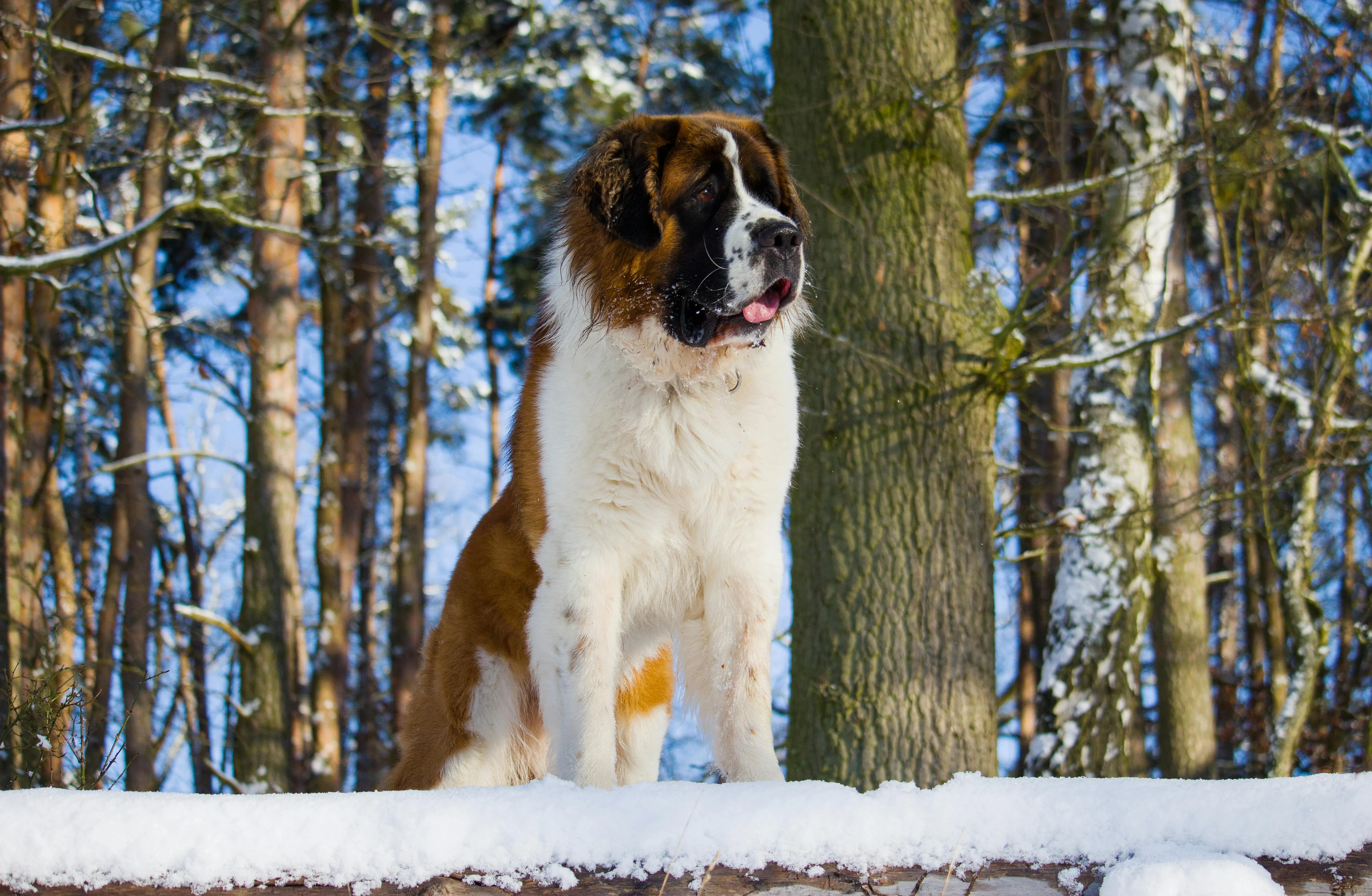
The St. Bernard is a large, powerful, and gentle dog with a calm disposition. It was originally bred in the Swiss Alps by monks at the St. Bernard hospice to rescue people and travelers who had been buried in avalanches. Today, the St. Bernard is a lovable family and companion dog that impresses with its gentleness, loyalty, and calmness.

Molossoids
.webp)
8 - 10 years

65 - 90 cm

55 - 90 kg
Personality
Trainability
Need for exercise
Suitable for families
Suitable as a beginner dog
Average health
Affection for people
Character and behavior of a St. Bernard
Saint Bernards are gentle, patient, and very family-oriented. They show deep loyalty to their humans and are particularly friendly toward children. Despite their size and strength, they are usually calm and composed. Saint Bernards are sensitive to their surroundings and form strong bonds with their family.
Training and raising a St. Bernard
St. Bernards are intelligent, but often somewhat stubborn and slow to respond to commands. Calm, consistent, and patient training is therefore important. Positive reinforcement, praise, and loving guidance work best. Early socialization helps to avoid insecurity around strangers, other dogs, and different situations.
Is the St. Bernard a family dog?
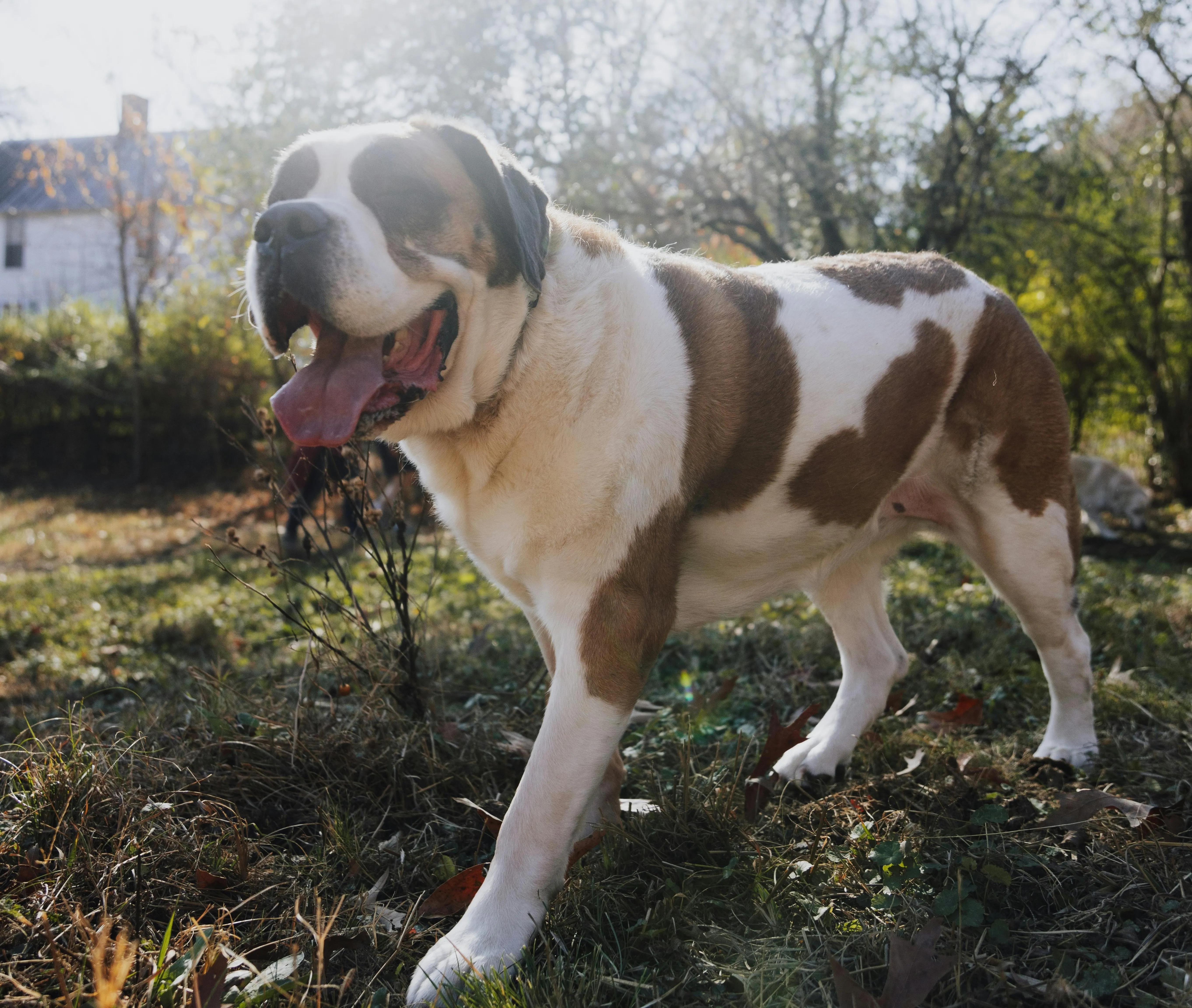
Yes, Saint Bernards are excellent family dogs. They are gentle, patient, and very fond of children. Their calm nature makes them particularly suitable for families who have enough space and take the size of the dog into account. They need attention and closeness, but are not overly active.
Do St. Bernards get along with other dogs?
Saint Bernards are generally friendly toward other dogs and animals. However, early socialization is important to promote balanced behavior. They rarely show aggression and usually get along well with other dogs.
Big dog, big protection!
Create the right protection for your St. Bernard with just a few clicks. No age restrictions, easy reimbursement of veterinary bills, 24/7 online veterinary advice.
How big and heavy does a St. Bernard get?
The St. Bernard is a very large and powerful dog:
Shoulder height:
Is between 65 and 90 cm
Weight:
Between 55 and 90 kg
Despite their size, they are agile and need moderate exercise. Regular walks and playtime keep them fit and healthy.
Affection for people
Saint Bernards are extremely people-oriented and family-oriented. They love closeness, affection, and shared activities. Their calm and gentle nature makes them loyal companions, even if they sometimes seem a little sluggish.
Coat care and hygiene for St. Bernards
Saint Bernards have medium-length to long fur that needs to be brushed regularly to prevent matting. The fur should be kept clean, especially around the ears, legs, and belly. Nails, teeth, and ears need to be checked regularly. Although the thick fur provides protection, the dog may need additional protection in extreme weather conditions.
What is the life expectancy of a St. Bernard?
The average life expectancy is 8–10 years. Large dogs such as St. Bernards often have a shorter life expectancy than smaller breeds. A healthy diet, exercise, veterinary checkups, and loving care can prolong life and improve quality of life.

What are the most common health problems in St. Bernards?
Saint Bernards can be prone to certain health problems:
- Hip and elbow dysplasia (HD/ED): Malformations of the joints that can cause pain and restrict movement.
- Heart disease: Heart valve problems or cardiomyopathies in particular may occur.
- Bloat/stomach torsion: A life-threatening condition in which the stomach twists; prompt veterinary attention is required.
- Osteoarthritis: Joint problems occur more frequently in older dogs, especially large breeds.
- Eye diseases: Such as cataracts or progressive retinal atrophy (PRA).
Regular veterinary checkups and responsible breeding can reduce risks.
How much does a St. Bernard cost?
A St. Bernard puppy from a reputable breeder in Switzerland usually costs between CHF and CHF . On top of that, there are ongoing expenses for food, veterinary care, grooming, and supplies.
Saint Bernard dog insurance
Due to their size and potential health problems, dog insurance is recommended. Joint, heart, and stomach problems in particular can result in high veterinary costs. Insurance ensures that St. Bernards can receive the best possible treatment in the event of illness.
Here you can find out more about St. Bernard dog insurance.


