

Bengal cat
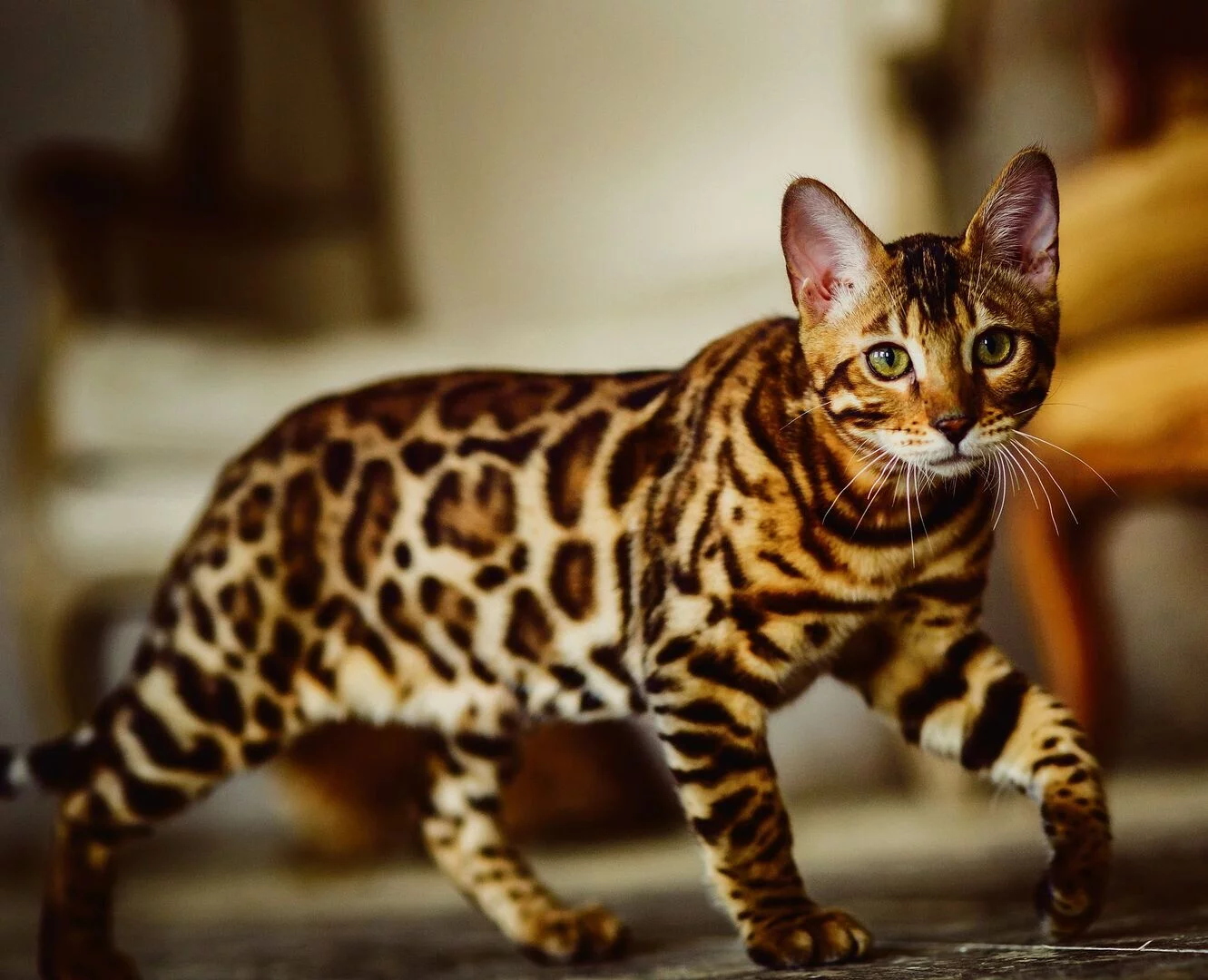
The Bengal is a striking cat with leopard-like fur. It was created by crossing domestic cats with the Asian leopard cat. Bengals are very curious, playful, and intelligent. They love being around people, bring energy and liveliness to the household, and fascinate with their unusual appearance and lively character.

Bengal cat
.webp)
12–16 years

10-16 inches

4–7 kg
Personality
Suitable for beginner cats
Average health
Affection for people
Physical activity
Character and behavior
Bengals are very energetic, curious, and clever. They love to play, climb a lot, and enjoy puzzle toys. Many even enjoy water and like to splash around in shallow bowls or sinks. They are very sociable and enjoy human contact, but need a lot of attention and stimulation. Bengals meow a lot, learn tricks quickly, sometimes even fetch small toys, and get bored if left alone for too long.
Coat care and hygiene
The Bengal's short, dense, and silky coat is very easy to care for. To maintain its shine and suppleness, it should be brushed once a week. During the shedding season, extra care may be necessary to remove loose hair and prevent skin irritation. Bengals are naturally very clean and groom their own coats, but their claws should still be checked regularly and their ears kept clean to prevent infections. Their coat shines particularly beautifully when they are well fed and get enough sunlight.
Size and weight
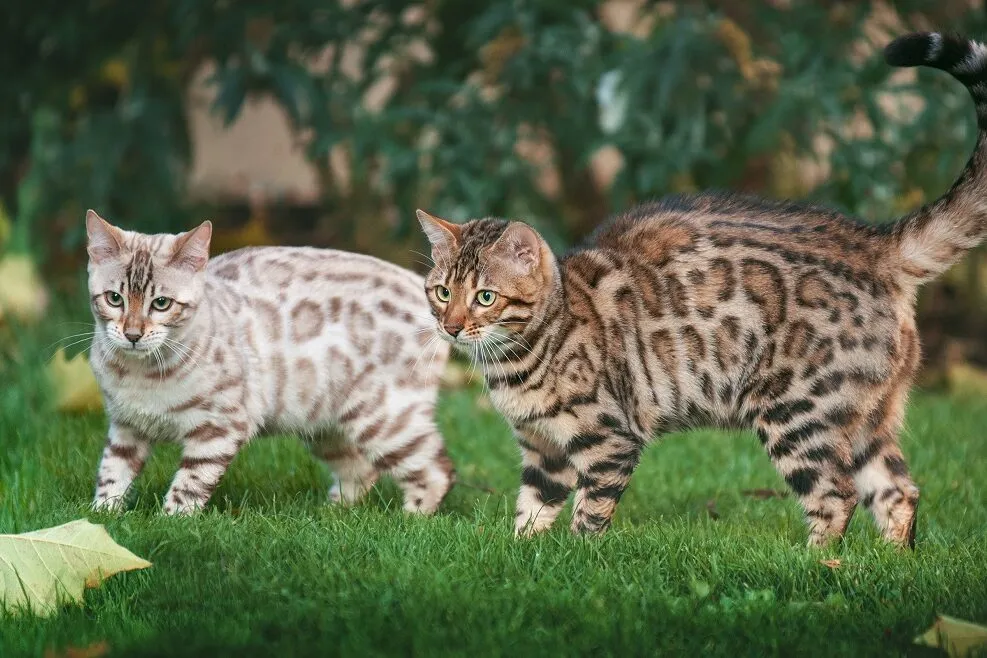
Bengals are medium to large cats with a muscular, athletic build and long, supple legs. Males usually weigh 5–7 kg, females 4–6 kg. They appear elegant, powerful, and agile, which underscores their activity and jumping ability. These cats love climbing, high vantage points, and running, which is why they need plenty of space and structure in large apartments or houses to live out their natural behavior.
Affection for people
Bengals show a lot of affection for their humans and enjoy being close to them. They like to cuddle, communicate a lot, and often form close bonds with individual people. Some are very cuddly, others are more selective, but all reward attention and shared playtime with loyalty. They get along well with children and other pets if they have enough playtime and places to retreat to. Their social nature makes them ideal companions for active households that want a close bond with their cat.
More activity, fewer worries?
Create the right protection for your Bengal cat in just a few clicks. No age restrictions, easy reimbursement of veterinary bills, and 24/7 online veterinary advice—so your Bengal stays healthy and active.
Cat insurance
Even though Bengals are considered healthy, cat insurance is recommended. It covers unexpected veterinary costs in the event of illness or accident and offers financial security. Many insurance companies offer additional services such as routine checkups, vaccinations, or dental care, which is particularly beneficial for active, playful breeds and makes everyday life more relaxed for owners.
life expectancy
Bengals have an average life expectancy of 12 to 16 years. With a balanced diet, regular vet check-ups, and sufficient exercise, they can lead a long and healthy life. Exercise, mental stimulation, and a healthy diet are crucial for keeping Bengals lively and happy.
Frequent health problems
Bengals are generally considered to be robust cats, but there are still some health risks. The most common problems include:
- Hypertrophic cardiomyopathy (HCM): A hereditary heart condition that can lead to heart problems.
- Polycystic kidney disease (PKD): A genetic disorder affecting the kidneys.
- Obesity: Can occur with insufficient exercise and poor nutrition.
- Dental diseases: Regular dental checkups are important to prevent inflammation.
Regular preventive checkups, ultrasound examinations for HCM risk, and a balanced diet are crucial to prevent long-term damage. Reputable breeders take care to minimize genetic risks and provide healthy, well-socialized cats.
Price
Bengals are among the more expensive cat breeds. In Switzerland, the purchase price ranges from 1,200 to 2,500 CHF, depending on the breeder, pedigree, and coat color. Reputable breeders prioritize health checks, socialization, and species-appropriate care, which justifies the cost. Additional expenses include food, toys, scratching and climbing structures, as well as regular visits to the veterinarian.


